A custom wire harness quotation depends on the defined design and scope. Branch layout and length, connector and terminal selection, wire and protection materials, assembly operations, inspection and test requirements, quantity, packaging and logistics all affect the work being quoted. Send a consistent drawing, BOM and quantity basis, and ask the supplier to state assumptions instead of filling gaps silently.
Key takeaways
Use one revision-controlled drawing, circuit definition and BOM as the quotation basis.
Separate prototype, pilot and recurring quantities, and distinguish orders from forecasts.
List tooling, tests, labels, records, packaging and logistics in the requested scope.
Request alternate components or processes as separate, approval-dependent options.
Compare offers only after confirming that inclusions, exclusions and assumptions match.
Which design inputs affect a quotation?
The drawing and circuit list define branches, lengths, terminations and assembly geometry. Connector, terminal, seal, wire, splice and protective-material references guide sourcing and process assumptions. Mark routing, marking, shielding or molding requirements in the approved design where applicable. If the design is preliminary, identify the open choices and ask the supplier to label any resulting proposal as provisional.
State sample, pilot and recurring quantities separately. If tooling, test fixtures, labels, inspection records or special packaging should be quoted, list them explicitly. Do not compare a fully scoped offer with one that omits those items. JinHai’s custom harness manufacturer page describes its OEM service, while the FAQ provides published ordering context.
How should the RFQ define the quotation basis?
Send one revision-controlled package and name the documents that govern the offer. Ask suppliers to identify included operations, exclusions, component assumptions, quantity tiers, quote validity and delivery basis. If connector or material choices remain open, request options separately. A supplier proposal does not authorize substitution for a specified part.
Review each quotation line against a requirement. Identify whether materials, assembly, tests, labels, packaging and shipping are included, excluded or still open. Avoid generic price-per-circuit comparisons when the design and scope differ. The production process provides assembly context, and the wiring harness quality page provides inspection context.
How should one-time and recurring costs be separated?
A sample build may involve setup, engineering review, fixtures or inspection work that does not repeat in the same way on later orders. Ask the supplier to show one-time charges separately from recurring assembly pricing where the quotation format allows. Clarify whether an existing fixture is proposed for reuse and confirm that it applies to the quoted configuration and revision.
Identify which records and checks are needed for sample approval and which apply to recurring deliveries. If a report, test adapter, label or special packaging method is optional, request it as a separate line. This lets engineering and purchasing decide whether the item belongs in the released scope before an award is made.
How should quantity tiers and logistics be compared?
Request pricing at clearly stated quantities and distinguish firm orders from planning forecasts. For every tier, state whether it applies to one release, scheduled releases or a cumulative program quantity. Compare suppliers at the same quantities and packaging assumptions. Do not extrapolate beyond quoted tiers without confirmation.
State the delivery destination, packaging, shipment frequency and required shipping documents. If freight, duties or other logistics charges are separate, show them separately and confirm who is responsible. A single quotation total does not establish that shipping is included.
How should alternate parts and processes be evaluated?
Keep a proposed alternative separate from the base configuration. Ask the supplier to identify the part or process, the reason for proposing it and any effect on fit, electrical definition, environmental needs, validation, records or commercial terms. Engineering should decide whether an alternative is acceptable before procurement compares it as equivalent. A lower price alone does not establish technical equivalence.
Materials should tie to controlled part references or be clearly marked as proposed. Do not assume two components are interchangeable because they look similar or share a general function. Where the required part has not been selected, ask for a defined option set and list what information the design owner must confirm before final pricing.
How can buyers make offers comparable?
Build a comparison around the same configuration, quantity and commercial basis. For each supplier, record the quoted drawing and BOM revisions, unit and one-time charges, included operations, tests and records, exclusions, assumptions, validity, delivery terms and open decisions. Use a clarification log when answers change the scope, and request an updated quotation when needed.
If a design or quantity changes during sourcing, preserve the earlier offer and request a revised version that names the new basis. This helps distinguish a scope change from a commercial assumption or expired validity. Before award, check that the selected offer matches the purchase order configuration and list accepted deviations, options and required records.
Quote readiness checklist
Current drawing, circuit definition, BOM and connector data are identified by revision.
Sample, pilot and recurring quantity assumptions are stated.
Application, routing and customer-defined acceptance requirements are attached.
Tooling, inspection, test, traceability, labels and packaging are scoped.
Delivery location, shipment basis and quotation validity are clear.
Alternates are separated from the base scope and require design approval.
Inclusions, exclusions, assumptions and open questions are recorded.
Frequently asked questions
Can cost be estimated from a photo?
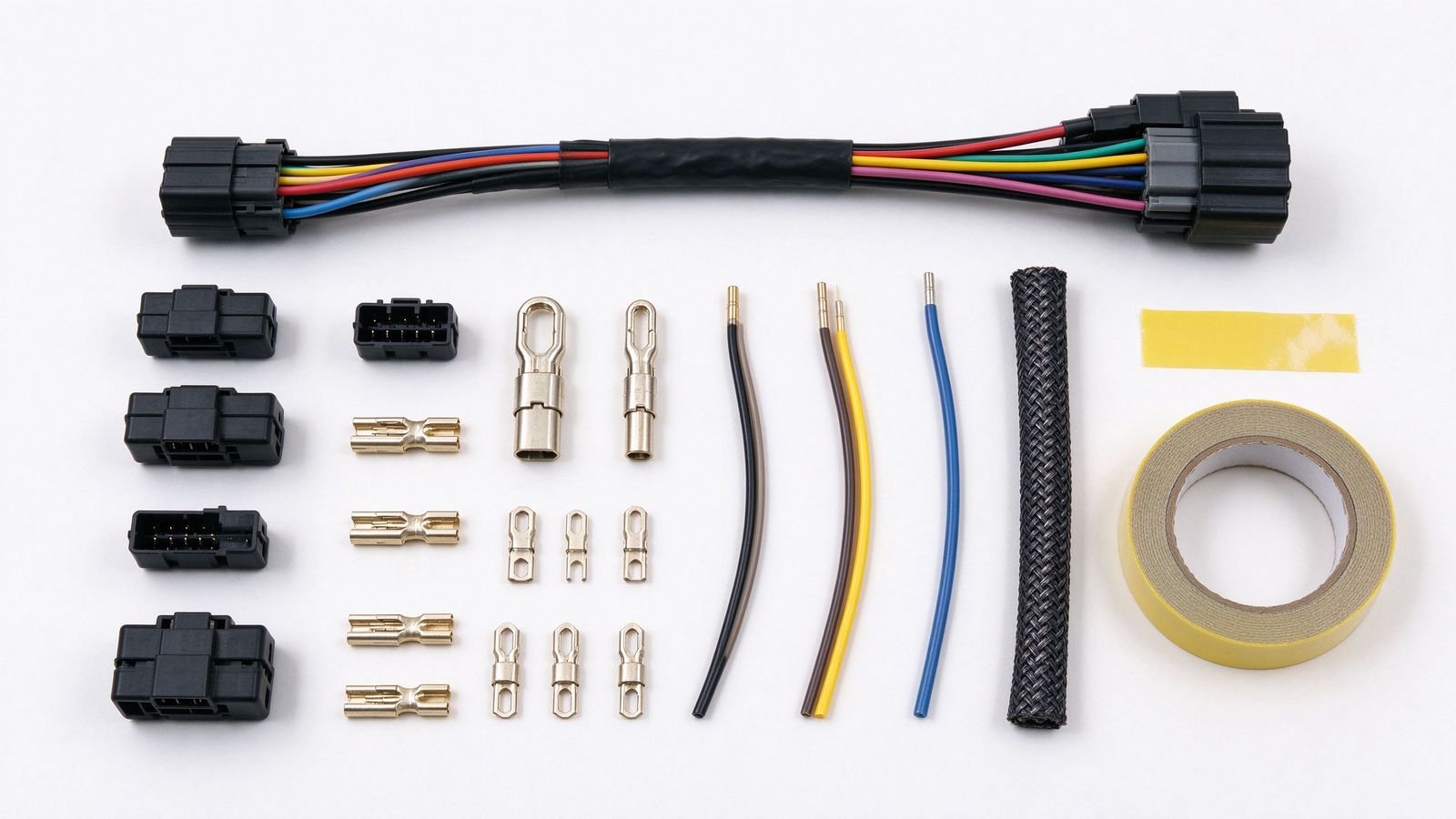
A photo may show the general application but usually does not establish materials, cavities, dimensions, testing, quantities or commercial terms. Provide controlled design information for a project quotation.
Does conductor count alone determine cost?
No. Components, branch layout, assembly processes, acceptance requirements and order scope also affect the work quoted.
How can buyers avoid hidden exclusions?
Ask each supplier to state inclusions, exclusions and assumptions against the same RFQ package, then clarify differences before comparing totals.
When should a quotation be revised?
Request an updated offer when the drawing, BOM, quantity, test scope, packaging or delivery basis changes. Keep each offer linked to its revision.
JinHai’s custom wire harness overview describes the service category. For project-specific pricing, submit controlled drawings and requirements through the JinHai contact page; actual pricing must be confirmed against the defined scope.


 Español
 العربية
 Bahasa Indonesia
 Tiếng Việt


 English
 Vietnamese
 Indonesian
 Arabic
 Spanish