
Custom USB Cable Assembly
JinHai Custom USB Cable Assembly: High quality and on-time delivery are the core tenets of our customer-centric corporate culture. Contact us to accelerate your project success.
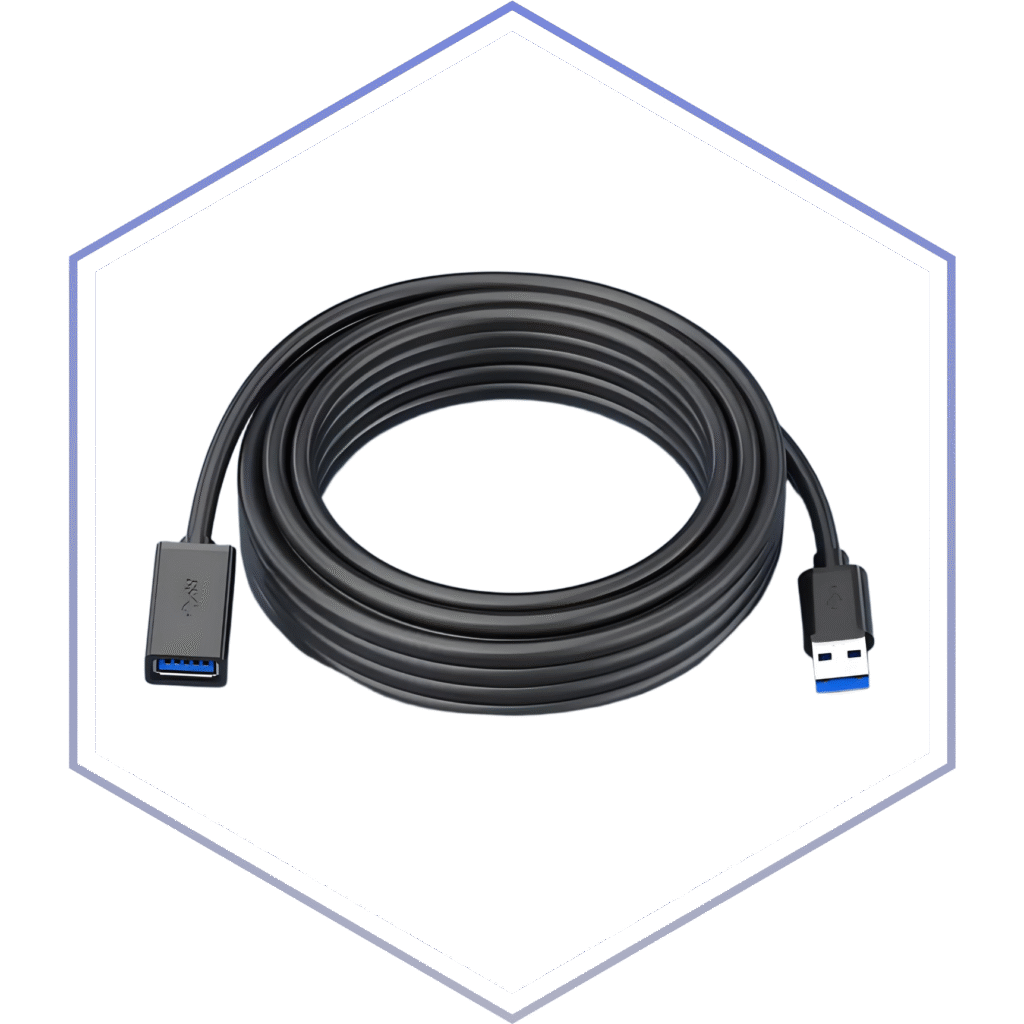
Applications in daily life and work
| Cable Type | Core Process Features | Advantages | Disadvantages |
|---|---|---|---|
| Budget USB 2.0 Cable | Copper-clad aluminum conductor, single-layer insulation, no/simple shielding, PVC outer sheath, thin plating, no E-Marker. | Lower price point, suitable for basic charging and low-speed data transfer. | High resistance leads to slow charging and excessive heat generation; Unshielded design makes signals susceptible to interference; Outer sheath is brittle and prone to damage; Limited functionality. |
| Standard USB 3.0 cable | Oxygen-free copper conductor, dual-layer shielding (aluminum foil + copper mesh), injection-molded reinforced connector | Data transmission is fast and stable, with strong resistance to interference and good durability. | The cable body is relatively thick and rigid (due to the shielding layer), resulting in higher costs. It may be overkill for older equipment. |
| High-Quality Type-C Fast Charging/Data Cable | Large-diameter oxygen-free copper (low resistance), premium shielding, E-Marker chip, TPE or braided outer jacket, thick gold plating. | Supports high-power fast charging with clear functionality (chip identification), soft and durable, with reliable contact. | The price is relatively high, and compatibility with the device protocol must be ensured. |
| Full-Function/Thunderbolt Type-C Cable | Highly complex multi-strand cores, premium shielding technology, precision E-Marker or lightning protection chips, high-strength braided outer sheath, precision injection molding. | Comprehensive functionality (data, video, and charging all through one cable), top-tier performance, exceptional durability, and certified reliability. | Expensive, thicker wire gauge, backward compatible but may not deliver full functionality. |
Our Customization Work


Quality and Safety, Guaranteed
Adhering to IPC/WHMA-A-620 standards, we ensure reliability and performance in each product.
USB Cable Assembly FAQ
Are USB data cables and chargers the same thing?
USB (Universal Serial Bus) cables are primarily used to connect devices and transfer data, but they can also be used for charging.
There are various types of USB cables, such as USB-A, USB-B, USB-C, and Micro-USB, which are widely used to connect peripherals, sync data, and charge devices.
How can I tell if my device has a USB-A or USB-C port?
You can distinguish them by their shape and function: USB-A is the most common, standard rectangular port that can only be inserted one way; it is often used in older computers, game consoles, and peripherals. USB-C, on the other hand, is a smaller, oval-shaped port that can be inserted either way.
It supports faster data transfer speeds (USB4/Thunderbolt) and higher power output, making it suitable for charging modern devices such as laptops, tablets, and smartphones.
How do I know which USB cable I need?
The USB-A connector is flat and rectangular, the USB-B connector is square with beveled corners, and the USB-C connector is small and oval-shaped.
Familiarizing yourself with these different shapes will help you quickly identify the cable type.
Does JinHai accept small-volume orders?
Yes, we accept both small-volume and large-volume orders.
We have provided manufacturing services for over 10 million cable assemblies to Anker.