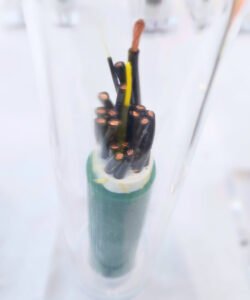
Chapter 1: What Types of 6 AWG Wire Are Used in the Construction Industry?
The core physical specifications of this wire are: a diameter of approximately 0.162 inches (4.115 mm), a cross-sectional area of approximately 13.3 mm², a resistance of approximately 0.395 Ω/1,000 feet for copper conductors, and a resistance of approximately 0.628 Ω/1,000 feet for aluminum conductors .
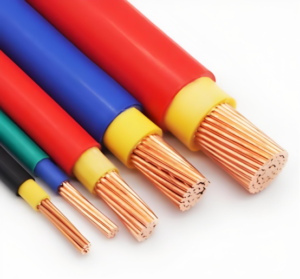
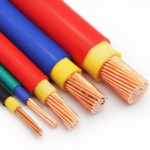
Various 6 AWG cables
In the construction industry, 6 AWG wire is primarily classified into the following types based on the insulation material:
1.THHN/THWN-2 (Thermoplastic High Heat-Resistant Nylon-Sheathed Wire) is the most common type used in construction applications. THHN stands for Thermoplastic High Heat-Resistant Nylon Sheath, while THWN-2 can be used in both wet and dry environments, with conductor temperatures not exceeding 90°C, and is suitable for applications up to 600V.
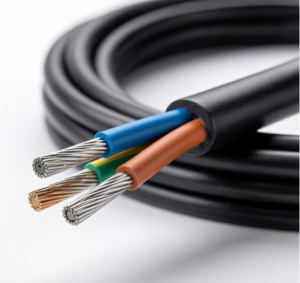
The most common 6 AWG wire used in construction
2.XHHW-2 uses cross-linked polyethylene (XLPE) insulation and offers excellent heat resistance and chemical resistance.
3.NM-B (non-metallic sheathed wire, commonly known as Romex) is primarily used for residential wiring as branch circuits for outlets, switches, and other loads. It is suitable for dry environments, and the overall current-carrying capacity of the cable is limited by the 60°C temperature rating.
4.USE-2/RHH/RHW-2 can be used for underground service entries, including direct burial, with a conductor temperature not exceeding 90°C.
5.SER (Service Entry Cable) is commonly used in multi-family residential buildings and is suitable for applications where the overall cable temperature does not exceed 75°C.
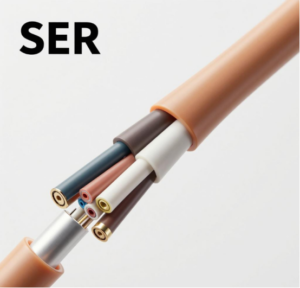
SER, the most commonly used 6 AWG cable
Chapter 2: What Are the Functions of 6 AWG Wire in the Construction Industry?
6 AWG wire serves multiple critical functions in the construction industry, with applications spanning from medium-duty loads to heavy-duty equipment:
Server Entrances: Installed in residential or small commercial buildings to meet power demands of 50 to 60 amps, serving as the entry-level configuration for a building’s electrical supply.
Subpanels: Power secondary distribution panels in residential and industrial applications, enabling zoned power management and efficient distribution.
HVAC Equipment: Typically used to power larger air conditioning units or entire central heating, cooling, and ventilation systems.
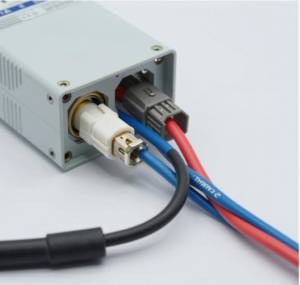
HVAC-specific 6 AWG
Industrial Equipment: Used in various motors, feeder lines, and air compressors to enhance the operational capacity of pump systems and other commercial machinery.
Chapter 3: How to Select the Right 6 AWG Wire?
Selecting the appropriate wire requires a comprehensive evaluation based on the following factors:
Matching (Ampacity) with Temperature Rating: The ampacity of 6 AWG copper wire varies depending on the insulation temperature rating; the final value must align with the lowest temperature rating among the wire and terminals.
Conductor Material Selection: Copper wire offers higher electrical conductivity (lower resistance, approximately 61% higher than aluminum) and greater durability, making it suitable for high-load equipment and short-distance wiring.
Environmental and Installation Conditions: Evaluate factors such as temperature, humidity, and whether the wire will be bundled with multiple cables at the installation site, as these can affect the actual ampacity. If necessary, derate the wire according to NEC regulations.
Voltage Drop Calculation: For long-distance wiring, voltage drop must be calculated.
Compliance Certification: Ensure that the selected wire complies with NEC standards and local building codes, and that installation is performed by a qualified electrician.
Chapter 4: What Are the Consequences of Choosing the Wrong 6 AWG Wire?
Using the wrong wire can result in serious negative consequences in multiple areas:
- Fire Risk: Using wire with insufficient current-carrying capacity allows the current to exceed the conductor’s safe load limit, leading to accelerated insulation aging, melting, and even ignition of surrounding combustible materials.
- Equipment Malfunctions Due to Excessive Voltage Drop: When the wire length exceeds the recommended distance without increasing the wire gauge, voltage drop can exceed the upper limit (typically 3% to 5%), causing issues such as dimmed lights and reduced appliance lifespan.
- Terminal connection failure: Aluminum wiring requires the use of anti-oxidants and specialized terminals. Incorrect connection methods or terminals can lead to oxidation at connection points, localized overheating, and ultimately terminal burnout or even fire.
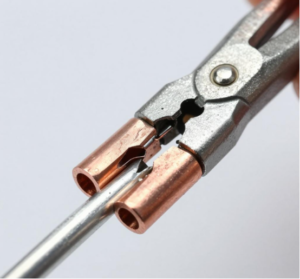
Incorrect Connection Methods for 6 AWG Aluminum Wire
Chapter 5: Conclusion
As a critical medium-duty conductor in building electrical systems, the proper selection of 6 AWG wire directly impacts the safety, reliability, and cost-effectiveness of the system. Leveraging its expertise, JinHai can provide the most suitable wire selection for your project, helping ensure its rapid success.