Chapter 1: What Are Agricultural Equipment Wiring Harnesses?
Product Overview
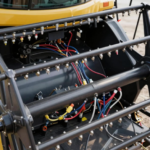
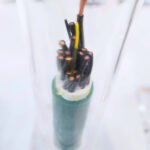
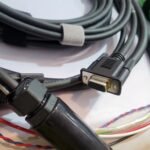
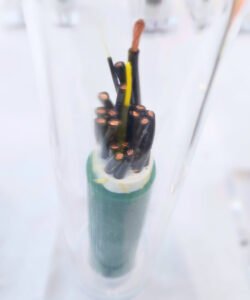
Agricultural equipment wiring harnesses refer to assemblies that integrate components such as wires, connectors, terminals, protective sleeves, and fuse boxes according to specific circuit diagrams, used to transmit electrical power and control signals within agricultural machinery. Compared to standard automotive wiring harnesses, agricultural equipment wiring harnesses face more severe environmental challenges: outdoor operation exposes them to rain, dirt, pesticides, and fertilizers; they endure continuous, intense vibration during operation; temperature ranges spanning from -30°C to over 85°C.
Core Value Proposition
The core value of agricultural equipment wiring harnesses lies in ensuring the continuous and reliable operation of agricultural machinery electrical systems in harsh environments. A well-designed wiring harness can: prevent signal interruptions caused by moisture and corrosion; resist UV aging and chemical erosion; maintain connector locking in vibrating environments; and simplify troubleshooting and maintenance processes.
Core Features at a Glance
| Feature | Typical Specifications | Description |
| Protection Rating | IP65 / IP67 (Connectors) | Dustproof and waterproof; withstands high-pressure water jet washing |
| Operating Temperature | -40°C to 125°C | Covers all-weather operating conditions for agricultural machinery |
| Chemical Resistance | Resistant to diesel, engine oil, fertilizers, and pesticides | Insulation materials use oil-resistant PVC or TPE |
| Vibration Resistance | 10–500 Hz, 5g acceleration | Passes random vibration testing |
| Flame Retardant Rating | VW-1 or FT1 | Prevents the spread of electrical fires |
| Service Life | 5–10 years (under normal operating conditions) | Depends on environment and frequency of use |
Chapter 2: In Which Agricultural Equipment Are Wiring Harnesses Used?
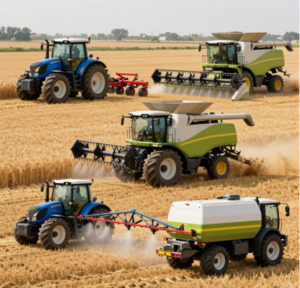
Agricultural wiring harnesses are widely used in various types of power machinery and implements. Below are six typical applications:
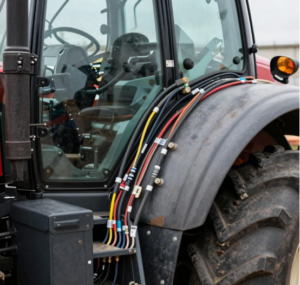
1.Tractors:As the core power source on farms, tractor wiring harnesses connect circuits for the engine control unit (ECU), transmission sensors, hydraulic valve assemblies, instrument panels, front and rear work lights, and PTO (power take-off) controls, typically comprising 80–150 connection points.
2.Combine Harvesters: Combine harvester harnesses must connect to over 30 sensors (grain moisture, loss monitoring, RPM feedback), electric adjustment actuators, in-cab displays, and alarm systems, with total harness lengths exceeding 50 meters.
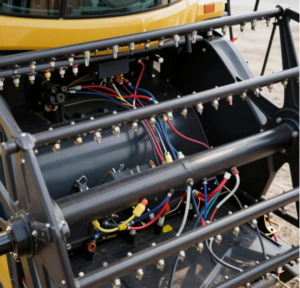
3.Sprayers:Wiring harnesses for self-propelled or towed sprayers must possess extremely high chemical corrosion resistance, as pesticide and fertilizer solutions may come into direct contact with the harness. Connectors must meet an IP67 protection rating to prevent chemical solution ingress and resulting short circuits.
4.Round Balers: The wiring harness for balers controls functions such as density adjustment, net wrapping mechanisms, and bale discharge flaps, while monitoring multiple proximity switches and pressure sensors. As the harness is often exposed to dust and grass debris, it requires an abrasion-resistant and tangle-free design.
5.Seeders: Modern pneumatic precision seeders are equipped with seed meter monitoring systems, where each seeding unit has sensors to detect seed passage. The wiring harness must be routed along the seeder’s frame, with a total of 24–48 connection points, and must withstand corrosion from field soil and fertilizers.
6.Feed Mixers: Self-propelled or towed feed mixers used for feeding on ranches. Their wiring harnesses control weighing systems, unloading door openings, mixing speeds, and more. The wires must be flexible and resistant to bending to withstand dynamic stresses during vehicle turns.
Chapter 3: How to Select the Right Wiring Harness for Agricultural Equipment?
Key Selection Criteria
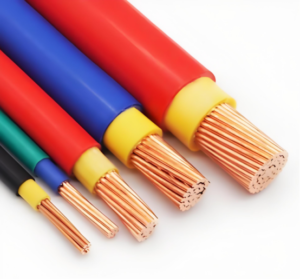
- Wire Gauge (AWG/mm²): Select the appropriate wire gauge based on the load current of each electrical component.
- Insulation Material: Depending on the operating environment, options include PVC, cross-linked polyethylene (XLPE), silicone rubber, TPE, or TPU.
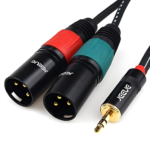
- Connector Type:Primarily Deutsch DT/DTP series, AMP Superseal series, and TE Connectivity HDSCS series; customization is also available based on customer requirements.
- Protection Rating:Options include IP65, IP67, and IP69K.
Customization Options
Agricultural equipment wiring harnesses support various customization options:
- pre-installed fuse boxes and relay modules;
- circuit identification using colored wires or heat-shrink tubing labels;
- injection-molded protection or heat-shrink sleeves at branch points;
- integrated diagnostic interfaces (such as CAN bus) for connection to the ISO 11783(ISOBUS) network.
Chapter 4: What Are the Risks of Incorrectly Selected Agricultural Equipment Wiring Harnesses?
Incorrect selection of agricultural equipment wiring harnesses can lead to multiple risks:
1.Intermittent equipment malfunctions: Using connectors with low protection ratings allows moisture to enter the connectors, causing terminal oxidation and resulting in intermittent equipment failures.
2.Fire:Improper use of insulation materials can accelerate aging; once the insulation cracks and comes into contact with the chassis, it can create a short-circuit arc and cause a fire.
3.Equipment Malfunction: Connectors with a single-latch mechanism may cause the plug and socket to separate or the terminals to disengage after prolonged vibration, resulting in equipment failure.
4.Signal Interference: Improper grounding design (such as multiple devices sharing a single ground wire or incorrect grounding locations) can create ground loops, introducing 50Hz/60Hz noise or high-frequency interference. This causes sensor signal drift and controller malfunctions. In modern agricultural equipment equipped with ISOBUS, this can disrupt the entire control system.
Chapter 5: Summary
Incorrect harness selection can lead to serious consequences ranging from intermittent failures to fire accidents, resulting in costly downtime and repair expenses. JinHai recommends that agricultural equipment manufacturers and farm owners consult professional harness suppliers thoroughly when procuring harnesses, provide detailed environmental parameters and electrical load data, obtain tailored selection solutions, and request samples for small-batch installation verification. Only wiring harnesses that have been tested under actual operating conditions can ensure that your agricultural equipment operates stably and reliably during every planting, crop protection, and harvesting season.