Chapter 1: How Do TRS Cables Perform in Practical Applications for Guitar Effects and Mixing Consoles?
TRS (Tip-Ring-Sleeve) cables are primarily divided into two types: balanced mono and unbalanced stereo, and the choice depends on the circuit design of the connected equipment.
In guitar effects and mixing console scenarios, the following types are primarily involved:
- Standard balanced TRS cables
- Stereo TRS Cables
- Insert Y-Cables
- Expression Pedal Control Cables
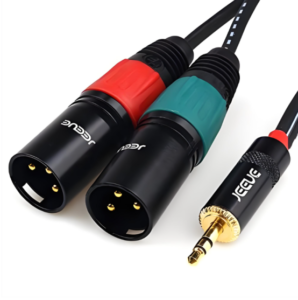
TRS cables for professional audio applications
Chapter 2: How to Select TRS Cables for Guitar Effects Pedals—Which Type Is Most Suitable?
Connection requirements for guitar effects pedals are relatively complex and require precise selection based on specific usage scenarios:
Series Connection of Single-Channel Effects Pedals
Since traditional guitar effects pedals use an unbalanced mono design, TS cables are the appropriate choice for most single-channel pedals. Practical testing shows that using TRS cables on TS jacks may result in 20–30% signal loss or partial functional failure.
Connecting Stereo Effects Pedals
When using effects units with stereo input/output (such as stereo delay or reverb), a stereo TRS cable should be selected. A single TRS cable can transmit both left and right channels, simplifying pedalboard wiring.
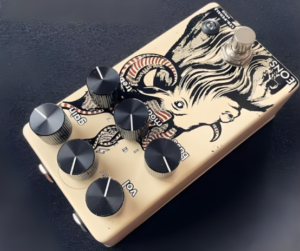
Stereo effects processors designed for use with TRS cables in stereo setups
Connecting Expression Pedals
For multi-effects units that support expression pedals, a TRS cable must be used. This is because expression pedals require three conductors to connect the potentiometer (input, slider, and ground) . Using a TS cable will result in the pedal functioning only partially, potentially causing issues such as reverse movement or reduced sensitivity.
Connecting a Guitar to a Wireless System or DI Box
When using an active guitar or requiring long-distance transmission, you can use a balanced TRS cable with a DI box. The DI box converts unbalanced signals into balanced signals, enabling noise-free transmission of up to 30 meters or more when used with a TRS cable.
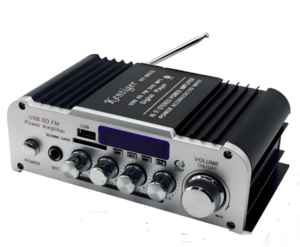
A DI box designed for use with TRS cables over long distances
Selection Recommendations: For guitar effects applications, it is recommended to have two sets of cables on hand—standard TS cables for basic connections, and a small number of TRS cables for stereo effects pedals and expression pedals. Cable lengths should ideally range from 0.3 to 1.5 meters; excessively long cables increase the risk of signal attenuation and interference.
Chapter 3: How to Select TRS Cables for Mixing Consoles—Which Type Is Most Suitable?
The connection environment for mixing consoles is more complex, with extremely high demands on signal purity and reliability. Below is a TRS cable selection guide for mixing console scenarios:
Connecting an Audio Interface to Monitor Speakers
This is the most typical balanced transmission scenario. High-quality balanced TRS cables should be selected, with the following specifications:
- Shielding coverage: ≥92% oxygen-free copper braided shield
- Conductor resistance: ≤58 mΩ/m
- Inter-conductor capacitance: ≤63 pF/m (low-capacitance design reduces signal attenuation)
- Conductor gauge: 0.30 mm² (approx. 23 AWG) or larger
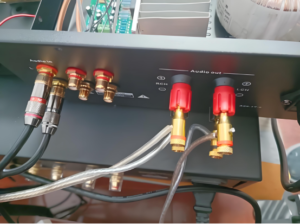
High-quality TRS cables designed for professional audio equipment
Patchbay Connections
Studio patchbays typically use TRS connectors for flexible signal routing. Here, highly durable TRS cables with a mating cycle of 5,000 or more should be selected. Gold- or silver-plated contacts reduce contact resistance; a gold plating thickness of ≥0.1μm is recommended to ensure long-term stability.
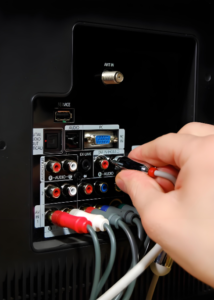
High-quality TRS cable connection patch panel
Insert Points
When connecting to external processors, use a Y-splitter cable (TRS to dual TS). The wiring must be correct: the TRS tip corresponds to the send (Send), and the ring corresponds to the return (Return). Reversing the connections will cause signal loop errors, and the equipment will not function properly.
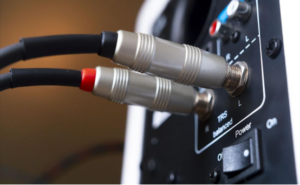
Y-type TRS cable
Headphone Distribution System
When connecting to a multi-channel headphone amplifier, use stereo TRS cables to transmit left and right channel signals. It is important to note that while balanced and stereo transmission use the same TRS connectors, their signal configurations are entirely different; mixing them will result in channel merging or phase issues.
Selection Recommendations: For mixing console applications, prioritize professionally certified TRS cables, such as brand-name products compliant with the AES48-2005 standard. Regarding length, balanced TRS cables can support noise-free transmission over 10–15 meters, but unbalanced stereo TRS cables should be kept under 3 meters.
Chapter 4: What Are the Consequences of Choosing the Wrong TRS Cables?
Choosing the wrong TRS cable has consequences far beyond simply “poor sound quality.” Below are five common consequences of incorrect selection and their quantifiable manifestations:
1.Complete Signal Loss or Missing Channels
Using TS cables on equipment requiring balanced TRS connections will prevent normal signal transmission. For example, plugging a TS cable into a balanced output jack may result in only the hot signal being transmitted, while the cold end remains floating, causing a 6dB drop in signal level and a significant increase in noise. Using a mono TS cable on stereo equipment will result in sound being output from only one channel.
2.Ground loops introducing persistent noise
Using unbalanced cables in a balanced transmission path compromises the system’s common-mode rejection capability. Measurement data shows that in such cases, background noise can increase by 15–20 dB, the signal-to-noise ratio drops from 90 dB to below 70 dB, and noticeable 50 Hz/60 Hz hum becomes evident.
3.Functional Failure or Control Anomalies
Control devices such as expression pedals are extremely sensitive to cable type. Using a TS cable in a TRS-required connector may cause the pedal to function only partially (e.g., only active in the fully open or fully closed positions), reverse the direction of movement, or reduce sensitivity by more than 50%.
4.Risk of Physical Damage to Equipment
Although using the wrong cable rarely causes immediate damage, forcing an incompatible connector into a socket can deform the internal contacts. When a TRS plug is inserted into a TS socket, the ring may make unintended contact, causing a short circuit.
5.Signal Crosstalk and Phase Issues
Using an incorrectly configured Y-cable at a mixing console input can cause the send and return signals to interfere with each other, creating a feedback loop. If a stereo signal is incorrectly connected to a balanced input, phase cancellation may occur, causing certain frequency components to disappear entirely.
Chapter 5: What Are the Benefits of Using the Correct TRS Cables for Home Studios or Music Production Companies?
Selecting the correct TRS cables is not only about sound quality but also directly impacts workflow efficiency and cost control. Below is an analysis of the benefits for different users:
Four Major Benefits for Home Studios
1.Improved Signal Purity: Proper cable selection can reduce background noise by 15–20 dB and expand the dynamic range from 80 dB to over 95 dB, resulting in cleaner recordings and greater flexibility for post-production.
2.Reduced Equipment Failure Rate: Using properly matched cables prevents issues such as jack damage and poor contact, reducing the frequency of equipment repairs. For individual studios with limited budgets, this translates to a longer equipment lifespan.
3.Improved Recording Quality: Ensuring signal quality from the source minimizes damage to the original audio caused by post-production noise reduction, resulting in a more professional-grade final product.
4.Streamlined Cable Inventory: Once the correct cable types are identified, stocking just three categories—TS, balanced TRS, and stereo TRS—covers over 90% of use cases, eliminating duplicate purchases.
Four Key Benefits for Music Companies
1.Improved System Stability: In complex systems with multiple devices and long signal chains, proper cable selection ensures stable signal transmission and prevents technical failures during live performances or recording sessions. For commercial operations, this safeguards brand reputation.
2.Reduced Labor Costs: Technicians no longer need to spend significant time troubleshooting cable-related issues such as ground loops and phase errors. Based on a technician’s hourly rate of 100–200 yuan, each quick troubleshooting session can save hundreds of yuan.
3.Protection of Equipment Assets: High-quality cables and proper selection prevent equipment damage caused by short circuits or poor connections. The repair cost for a single mixing console or audio interface can reach thousands of yuan, far exceeding the initial investment in the cables themselves.
4.Standardized Audio Quality: Maintaining consistent signal quality across different venues and equipment ensures customers receive a stable service experience.
Chapter 6: Conclusion
Whether you are an independent musician seeking a seamless creative process or a commercial recording studio focused on operational efficiency, investing in the right TRS cables is a foundational investment with an extremely high return on investment. With advanced manufacturing equipment and superior craftsmanship, JinHai can help ensure the success of your TRS cable project.