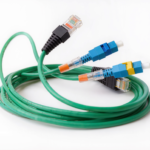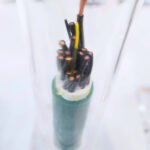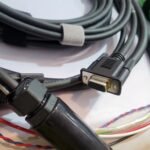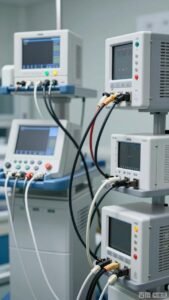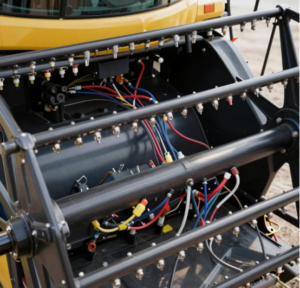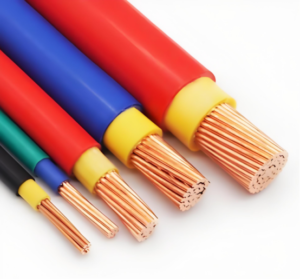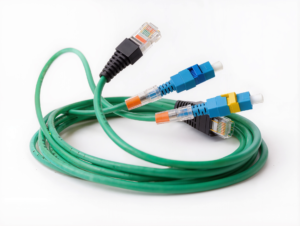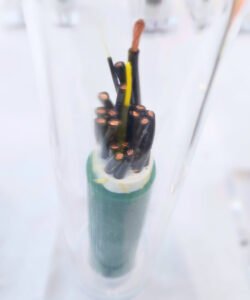
Amid the wave of Industry 4.0, the evolution of autonomous driving in new energy vehicles, and the iterative development of high-end medical imaging equipment, the operational logic of devices is undergoing a fundamental restructuring. Whereas machines of the past relied on simple on/off signals, today’s equipment depends on massive, real-time data streams. High-definition machine vision cameras, LiDAR, and multi-axis servo systems are processing gigabits—or even terabits—of data at unprecedented speeds.
If power harnesses are the “blood vessels” of a device, then high-speed data harnesses are the “nervous system” running throughout its body. However, when this delicate and fragile nervous system is deployed in “harsh environments” filled with strong electromagnetic interference, severe vibration, extreme temperatures, and chemical corrosion, traditional cabling solutions often fail instantly.
As a professional harness manufacturer deeply rooted in the field of precision connectivity, JinHai understands that there is no absolute winner in this debate. True customization goes beyond simply manufacturing according to drawings; it requires a deep understanding of physical operating conditions and electrical limits. This article will provide an in-depth analysis of the optimal solutions for high-speed data harnesses in harsh environments, focusing on four key dimensions: electromagnetic compatibility, mechanical stress, connector protection, and customized integration.
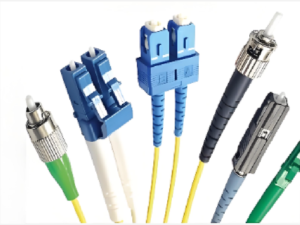
Ethernet and Fiber Optic Cable: Electromagnetic Interference (EMI) and Signal Integrity
In industrial facilities or the high-voltage systems of electric vehicles, ubiquitous inverters, large motors, and high-frequency switching power supplies create an extremely harsh electromagnetic environment. Such conditions are fatal to high-speed data signals.
The Defense Barrier for Industrial Ethernet
Industrial Ethernet cable assemblies based on copper conductors (such as Cat6a, Cat7, or even Cat8) are highly susceptible to absorbing external electromagnetic radiation when transmitting high-frequency signals, leading to crosstalk and bit errors. To combat EMI, engineers must rely on extremely complex shielding structures. High-quality custom Ethernet cable assemblies typically employ SF/UTP or S/FTP structures—that is, the twisted pairs are wrapped in a high-density tinned copper braid (with a coverage rate of over 85%), and an aluminum foil shield is added around each pair of conductors. This dual-layer shielding effectively resists both low- and high-frequency interference; however, in environments with extremely high-voltage and strong magnetic fields (such as inside MRI medical equipment or near EV motor controllers), the shielding capability of copper cables still faces physical limitations.
The Dimensional Advantage of Fiber Optics
When it comes to combating EMI, fiber optic cables demonstrate a clear dimensional advantage. Since fiber optics transmit signals via total internal reflection of photons within a glass or plastic core, they are completely immune to any form of electromagnetic interference (EMI) and radio frequency interference (RFI). Furthermore, fiber optics generate no electromagnetic radiation and are non-conductive, which means they completely eliminate ground loop issues, making them the perfect choice for mixed high-voltage and low-voltage cabling scenarios. If your equipment faces severe, intractable interference, fiber optics are often the only reliable data transmission path.
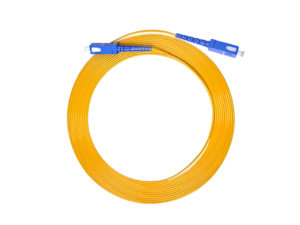
Ethernet and Fiber Optic Cable Testing Physical Limits: Tensile Strength, High Flexibility, and Environmental Corrosion Resistance
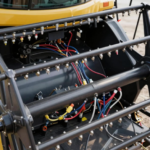
While invisible electromagnetic interference has been addressed, the violent tugging that cable harnesses encounter in the physical world can be equally devastating. Whether it’s the multi-axis movement of industrial robot arms or the drag chain systems in automated warehouses, cable harnesses must withstand millions of cycles of bending, twisting, and stretching.
The “Metal Fatigue” Crisis of Copper-Core Ethernet
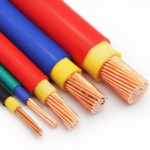
Standard Ethernet cables use single-strand solid copper wire (Solid Core), which is highly susceptible to metal fatigue or even core breakage when subjected to frequent bending. For custom Ethernet cable assemblies requiring dynamic movement, JinHai’s solution employs high-strand, ultra-fine oxygen-free copper (OFC) strands (such as 26 AWG, composed of dozens or even hundreds of micron-level copper wires). Combined with highly abrasion-resistant and tear-resistant PUR (polyurethane) or TPE (thermoplastic elastomer) jackets, these custom high-flex industrial Ethernet cable assemblies can easily handle extremely small bend radii and withstand tens of millions of cycles of reciprocating motion in high-speed drag chains without breaking.
Fiber Optic Cable “Micro-bend Loss” and Tensile Armor
Although fiber optics offer astonishing bandwidth, their core is ultimately made of silica (glass). When subjected to extreme physical bending, fiber optics are not only prone to breaking but also suffer from “micro-bend loss” (a sharp increase in attenuation). To enable fiber optics to withstand harsh environments, custom manufacturing processes must be employed:
Tensile Reinforcement: High-strength Kevlar (aramid yarn) is filled between the fiber core and the outer jacket. This material, commonly used in bulletproof vests, absorbs the vast majority of longitudinal tensile forces, protecting the fragile glass core.
Armored Fiber: In highly destructive heavy industrial settings (such as environments with risks of heavy objects crushing the cable or rodent damage), we can customize armored fiber bundles featuring a spiral stainless steel corrugated tube inside. This design maintains a certain degree of flexibility while providing exceptional resistance to crushing.
Ethernet and Fiber Optic Cable: Connector Ecosystem and Protection
The reliability of a data cable assembly is often determined by its weakest link—the connector. In workshops filled with dust, cutting fluids, and intense vibrations, the RJ45 plastic connectors or fragile LC fiber optic connectors commonly used in office environments would not last a single workday.
Industrial Ethernet Armored Connectors: M12 X-code
To meet the transmission demands of Gigabit and even 10-Gigabit Ethernet while complying with IP67/IP68 waterproof and dustproof ratings, the M12 X-code connector has become the standard for custom industrial cable assemblies. Its internal X-shaped metal cross-shielding frame completely physically isolates the four data pairs, minimizing high-frequency crosstalk; meanwhile, its robust threaded locking mechanism provides excellent resistance to intense mechanical vibration. From sensors to industrial switches, the M12 system has established an extremely robust connection ecosystem.
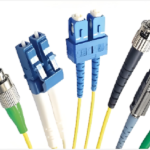
Ruggedized Fiber Optic Cable Connection Technology
The core challenge with fiber optic connectors lies in their extreme sensitivity to contamination—a single speck of dust on the fiber end face can render the entire link inoperable. When designing custom industrial fiber optic harnesses, we typically employ the following two strategies:
IP-rated sealed connectors: Such as ODVA or ruggedized LC connectors, which are encased in heavy-duty waterproof housings and O-rings to ensure that the internal end faces are completely isolated from the outside environment after mating.
Expanded Beam Technology: For high-frequency mating or extremely harsh military/heavy-industry environments, expanded beam connectors use lenses to amplify the light beam and transmit it across air gaps. Even if there is a small amount of dust on the end face, the impact on the amplified beam is negligible, greatly reducing the difficulty of cleaning during field maintenance.
Ethernet and Fiber Optic Cable: The Rise of Hybrid Cable Assemblies
In practical engineering design, system architects often face a dilemma: equipment must both provide high current to drive servo motors and transmit lossless high-definition video streams or Ethernet control signals via fiber optics. Separate cabling not only requires twice as many connectors and occupies twice the valuable space but also drastically increases assembly complexity and weight.
As the most advanced form of custom cable harnesses, hybrid cable assemblies perfectly address this challenge.
Through scientific design, we can precisely extrude large-gauge power copper wires (such as 10 AWG), control signal wires, and multi-core optical fibers within the same cable jacket. This integrated design enables:
Significant reduction in system weight and volume (which is critical for autonomous vehicles and lightweight robots).
Shorter on-site installation time, as power and data connections can be established simultaneously with a single plug-and-play connection.
Eliminate electromagnetic interference, as optical signals remain unaffected even when high-voltage wires are in close proximity to optical fibers.
The manufacturing of hybrid cable assemblies is the ultimate test of a factory’s production capabilities. It requires manufacturers not only to master the precision crimping of large-gauge terminals but also to possess the skills for optical fiber polishing and testing. Furthermore, they must precisely control internal tension during extrusion to prevent copper wires from compressing optical fibers during movement.
Ethernet and Fiber Optic Cable the Mass Production Gap: The Engineering Expertise of a Quality Manufacturer
In the customization of data cable assemblies for harsh environments, there is a significant gap between “design feasibility” and “reliable mass production.” For high-speed signal cable assemblies, simple continuity testing is far from sufficient.
A professional cable assembly partner with engineering expertise must establish a closed-loop testing system based on high-frequency signals. At JinHai, whether customizing industrial Ethernet or fiber optic assemblies, every batch of products must pass rigorous standard testing:
Ethernet Harnesses: Using professional network testers such as Fluke, we conduct comprehensive scans for return loss, insertion loss, and near-end crosstalk (NEXT) to ensure that no crimp point becomes an impedance bottleneck for high-frequency signals.
Fiber Optic Cables: Using OTDRs (Optical Time-Domain Reflectometers) and interferometers, we not only measure end-to-end attenuation but also perform 3D geometric measurements of the end-face curvature radius and vertex offset.
System Assurance: All stripping, crimping, and assembly processes strictly adhere to the globally recognized IPC/WHMA-A-620 acceptance standards and achieve full lifecycle traceability within the framework of the IATF 16949 quality management system.
Conclusion
In the journey toward building the next generation of industrial and technological equipment, there are no shortcuts when it comes to data transmission. Whether choosing highly flexible shielded Ethernet cables that are robust, tensile-resistant, and easy to terminate; interference-immune, high-bandwidth ruggedized fiber optics; or highly integrated optoelectronic composite harnesses, the core of decision-making must always be grounded in specific physical operating conditions.
High-speed data harnesses are by no means standardized off-the-shelf products; they are customized engineering components that determine the upper limit of equipment performance. Selecting a harness manufacturer with deep DFM (Design for Manufacturing) capabilities, mastery of rigorous testing standards, and the ability to respond quickly to prototyping requests will help you avoid hidden system risks. This ensures that every bit of data reaches its destination safely and accurately, even in harsh environments characterized by extreme cold and vibration.