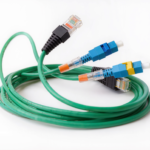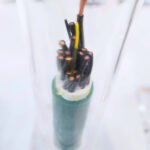
If you’re struggling with communication stability in your projects or tired of suppliers’ high minimum order quantity requirements for custom specifications, JinHai offers the optimal solution. As a professional custom cable assembly manufacturer, we specialize in creating highly reliable communication cable assemblies for extreme environments. Contact the JinHai engineering team today to receive a free DFM (Design for Manufacturability) evaluation and precise quote with a rapid response within 24 hours!
To help electrical engineers and system integrators avoid “selection pitfalls” early in their projects, this article provides an in-depth analysis of the technical hurdles and considerations that must be addressed when customizing industrial Ethernet and fiber optic cables.
I. The Hidden Killers of Industrial Ethernet: Electromagnetic Interference (EMI) and Mechanical Fatigue
Unlike the quiet environments of office buildings, industrial sites are filled with variable frequency drives, large motors, and high-voltage power grids. The strong electromagnetic fields generated by these devices can easily penetrate the insulation of standard network cables, injecting lethal noise into the data stream.
1. Precision Shielding Solutions
When customizing industrial Ethernet cables, the primary task is to build an impenetrable electromagnetic shielding layer.
- U/UTP (Unshielded Twisted Pair): Suitable only for interference-free, pristine environments; essentially phased out in industrial customization.
- F/UTP or S/UTP (Single-layer Shielding): Wrapped with aluminum foil or a copper wire braid. This can handle moderate interference but remains inadequate against high-frequency noise.
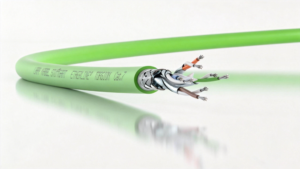
- S/FTP (Double Shielding): This is JinHai’s top recommendation for high-demand projects. Each pair of conductors is first individually shielded with aluminum foil (to prevent crosstalk between pairs, i.e., NEXT/FEXT), and then covered with a high-density tinned copper braid on the outermost layer. Combined with a 360° fully shielded metal connector housing, this completely isolates external noise, ensuring true 10-gigabit transmission for high-speed data at Cat6a and even Cat8 levels.

2. The Art of “Bend Resistance” in Motion Control
In addition to invisible electromagnetic waves, visible mechanical motion can be equally detrimental. In robotic arms or automated drag chain systems, network cables must endure thousands of bends and twists daily.
To address these dynamic operating conditions, custom cables require a complete redesign of both the conductor and jacket:
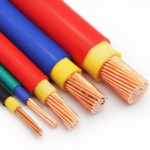
- Conductor Structure: Abandoning traditional solid copper, we adopt ultra-fine stranded copper wires to significantly enhance the cable’s physical flexibility.
- Jacket Material: Replacing PVC, which tends to harden and become brittle, with custom PUR (polyurethane) or TPE (thermoplastic elastomer) outer jackets. These materials not only withstand over a million bending cycles but are also resistant to corrosion from machine oil and cutting fluids in the workshop, while maintaining remarkable elasticity in extreme cold (–40°C) or high-temperature environments.
II. Pushing Physical Limits: Armored Fiber Optics Break Through in Harsh Environments
When data transmission distances exceed 100 meters, or complete immunity to electromagnetic interference is required, fiber optics become the only viable option. However, glass fiber cores are inherently fragile; a single instance of accidental crushing by heavy objects or gnawing by outdoor rodents can cause an instant interruption of the optical signal.
1. Armored Technology: Putting on “Bulletproof Armor”
To give optical fiber the same physical resilience as heavy-duty cables, JinHai has incorporated high-strength armored processes into its custom solutions:
- Corrugated Steel Tape Armoring: A layer of extremely thin stainless steel tape is spirally wound between the inner and outer jackets of the fiber. This design not only withstands extremely high lateral pressure (Crush Resistance)—even ensuring the inner core remains undamaged even if run over by a forklift—but also serves as the ultimate defense against rodent damage (Rodent-proof), making it the top choice for outdoor direct burial or cabling in harsh industrial environments.
- Flexible Metal Tubing Armoring: For local connections requiring some flexibility but facing the risk of impact damage from drops, we use a fine stainless steel tube to encase the fiber core internally. This provides ultimate physical protection while maintaining excellent installation flexibility.
2. Microscopic Innovations in Bend-Resistant Fiber Cores
With traditional optical fibers, excessive bending causes the light beam to escape from the cladding, resulting in severe macro-bend loss. In cabinets with extremely limited space and numerous cabling bends, we strongly recommend using bend-resistant single-mode fiber compliant with the ITU-T G.657 standard. Even at bending radii of 10 mm or smaller, signals can still be transmitted with zero loss.
III. Industrial-Grade Sealing and Molding Processes for Connectors
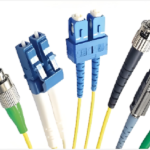
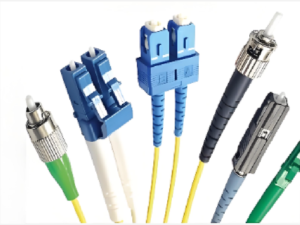
No matter how robust the cable itself may be, if the connectors at either end are subpar, the entire communication system will still collapse. High-pressure water washing and dust-filled conditions in industrial environments often cause ordinary RJ45 or LC/SC connectors to short-circuit and fail instantly.
1. The Industrial Evolution from RJ45 to M12
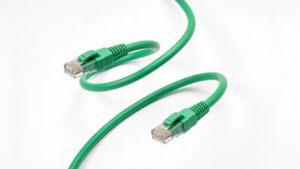
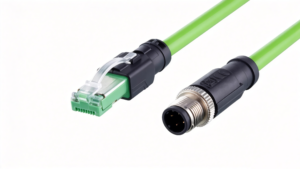
In environments involving severe vibration or high humidity, JinHai strongly recommends that customers abandon leaf-spring-type RJ45 connectors in custom Ethernet solutions and upgrade to M12 connectors (e.g., D-coded for 100Mbps, X-coded for 1Gbps/10Gbps). The M12’s threaded locking mechanism completely eliminates loosening caused by vibration.
2. Absolute Protection Through Overmolding
For waterproof fiber optic pigtails or Ethernet connectors, the sealing quality achieved through manual assembly can never match that of machine-based processes. JinHai employs advanced low-pressure overmolding technology.
We place the junction between the cable and the connector into a mold and inject polymer resin. After cooling, the connector’s tail and the cable jacket fuse completely into a single unit, forming a seamless mechanical bond. This process not only provides unparalleled strain relief (preventing accidental cable breakage) but also elevates the overall protection rating directly to IP67 or even IP68, enabling stable operation during prolonged submersion or exposure to sandstorms.
IV. No “Lottery Box” Deliveries: Data-Backed Top Quality
The biggest fear with custom communication cables is that they may look perfect to the naked eye but suffer from severe packet loss as soon as they are installed. For high-frequency Ethernet and fiber optics—which are extremely sensitive to optical paths—the testing phase is the only true litmus test of a manufacturer’s professionalism.
At JinHai, all custom communication components must undergo 100% instrument testing before leaving the factory:
- In-Depth Ethernet Testing: We go beyond simple continuity checks. Using professional Fluke network testers, we rigorously evaluate critical high-frequency metrics—including insertion loss, return loss, and near-end crosstalk (NEXT)—for every cable. We issue authentic test reports to ensure compliance with relevant Cat category standards.
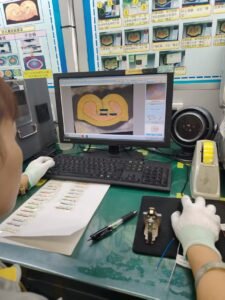
- Fiber End-Face and Optical Inspection: All fiber optic connectors (whether UPC or APC polished) undergo 400x end-face microscopy inspection to ensure there are no scratches or contamination. Subsequently, attenuation testing is performed using an Optical Time-Domain Reflectometer (OTDR) to ensure loss values are well below industry standards.
- System Assurance: Our entire production process strictly adheres to the IATF 16949 automotive-grade quality management system and the IPC/WHMA-A-620 international wiring harness acceptance standard. We eliminate uncertainties in the production process through rigorous discipline.
V. JinHai’s Customization Commitment: Bridging the Gap Between Engineering and Manufacturing
Many engineers face a dilemma when seeking custom cable suppliers: “Large manufacturers won’t take small orders, while small manufacturers can’t deliver quality.” JinHai deeply understands this industry pain point. We position ourselves not merely as a contract manufacturer, but as an extension of your R&D team.
- Extremely Low Minimum Order Quantity (MOQ): Whether it’s 5 units during the R&D prototyping phase or 5,000 units in mass production, we treat every order with the same dedication. Our agile manufacturing system fully supports your prototype testing and rapid iteration.
- Engineering Support and Alternative Solutions: When faced with specific brand connectors in your drawings that are expensive or have long lead times, JinHai’s engineering team can quickly identify alternatives from our global supply chain that offer equivalent performance, better pricing, and ample inventory, helping you achieve significant cost reductions.

Conclusion: Make Your Data as Unstoppable as a Colossal War Machine
Custom fiber optic and Ethernet cables are far more than a simple assembly of wires and connectors. They serve as a shield against electromagnetic interference, armor against physical wear and tear, and the nerve center ensuring the stable operation of your entire industrial system. In complex and harsh environments, even the slightest compromise can lead to catastrophic consequences.
Choosing JinHai means choosing a complete, secure closed-loop system—from top-level design and materials science to precision manufacturing. Don’t let substandard communication cables become the Achilles’ heel of your high-precision equipment.
What kind of communication protection does your next project require? Are you still struggling to find a supplier for small-batch customization needs? Submit your drawings or requirements to JinHai today—our senior engineers are ready to provide you with tailor-made cable solutions and highly competitive quotes. Click the inquiry button on the right, and let’s start connecting to the future!