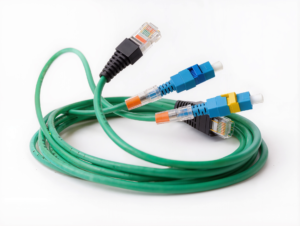
Connectors Fundamentals
Definition and Functions of Connectors
Automotive wiring harness connectors are detachable components primarily responsible for establishing a disconnectable bridge between two independent electrical circuits. Their core functions encompass the following four aspects:
- Electrical Connection: Reliably transmits current and signals, ensuring low resistance, low voltage drop, and stable contact.
- Circuit Disconnection: Facilitates installation, maintenance, and replacement of assemblies, modules, or subsystems.
- Signal and Power Distribution: Within complex wiring networks, connectors serve as critical junctions for signal and power convergence and divergence.
- Physical Protection: Provides mechanical locking, insulation, and environmental shielding for internal metal terminals.
Core Components of Connectors
A typical automotive connector generally consists of the following three major parts:
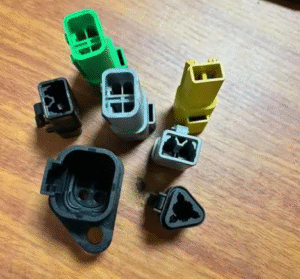
- Shell:
- Function: Serves as the connector’s structural framework and primary defense. It provides terminal positioning, guidance, locking, and protection.
- Structure: Typically designed as plugs and sockets. The shell integrates critical mechanical structures such as guide slots/keyways, secondary locking mechanisms, CPA, TPA, and brackets or latches for securing to vehicle bodies or equipment.
- Terminals:
- Function: Responsible for the actual electrical contact.
- Material: Terminals are typically made of copper alloys, with plating applied to enhance conductivity and corrosion resistance.
- Structure: Terminals are categorized into male and female types. Male terminals are usually pin-shaped or blade-shaped; all female terminals incorporate precision spring mechanisms (such as cantilever beams or torsion springs)

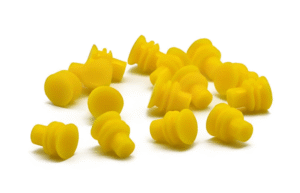
- Sealing Components:
- Function: Prevents moisture, dust, and other contaminants from entering the connector interface in waterproof applications.
- Types: Includes cable glands, body seals, and blind plugs. Typically made from elastic materials like silicone rubber.

Primary Types of Automotive Wiring Harness Connectors
Based on application areas and electrical requirements, automotive connectors can be categorized into the following major types:
Classification by Electrical Load
- Low-voltage connectors:
- Signal-level connectors: Used for transmitting sensor signals and data buses (e.g., CAN, LIN, FlexRay, Ethernet). Typically carry currents below 5A with small terminal pitch (0.5mm, 0.64mm, 1.0mm) and high pin counts. Require high shielding and crosstalk control.
- Power/Drive-Level Connectors:
- Drive actuators such as window motors, fans, and lighting. Current ranges from 10A to 40A, with larger terminal pitches (1.5mm, 2.8mm, 4.8mm, 6.3mm) and robust construction.
- High-Voltage Connectors:
- Specifically designed for new energy vehicles (EV/HEV/PHEV) to connect power batteries, drive motors, DC-DC converters, onboard chargers, etc. Operating voltage typically ranges from 60V to 1500V DC, with currents exceeding 250A.
- Features: High-voltage interlock (HVIL) functionality, touch-proof design, orange identification, mandatory safety locking mechanisms, and stringent electrical clearance requirements.
- High-Frequency RF Connectors:
- Used for high-speed data applications such as GPS, 5G, V2X, in-vehicle radar, and cameras.
- Types: Includes FAKRA (traditional), HSD (for differential signals like LVDS), and the latest Ethernet connectors. Demands extremely high standards for impedance matching, signal attenuation, and shielding effectiveness.
Classification by Application Area
- Engine Compartment Connectors: Require extremely high temperature resistance (-40°C to +150°C), excellent vibration resistance, good oil and chemical corrosion resistance, and high-grade sealing performance (typically IP69K).
- Cockpit/Body Connectors: Operate in relatively mild environments but are more sensitive to space constraints, assembly ease, and cost. Sealing requirements may be lower or unnecessary.
- Chassis Connectors: Face challenges like vibration, mud/water ingress, and stone impact, requiring robust mechanical strength and sealing.
- Door Harness Connectors: Must withstand frequent bending motions.
Special Function Connectors
- Board-to-Board/Wire-to-Board Connectors: Used to connect wiring harnesses to the PCBs of ECUs or other electronic control units.
- Blind-Mate Connectors: Rely on alignment structures for automatic positioning and connection in confined assembly spaces or where direct visibility is unavailable. Commonly used in instrument panels and infotainment system assemblies.
Principles for Matching Terminals and Connectors
Terminals form the core of connectors, and their compatibility with connectors is critically important for design.
Terminal Selection
- Dimensions and Current Carrying Capacity: Select the terminal’s cross-sectional area and type based on the maximum current passing through it. Power terminals are typically larger, while signal terminals are smaller.
- Materials:
- Base Material: Copper is commonly used for terminal manufacturing. However, when comparing terminal strength and elasticity, phosphor bronze > phosphor bronze > brass.
- Terminal Plating:
- Terminals are categorized by plating material into tin-plated, gold-plated, and silver-plated types. Each serves distinct applications. Given the higher cost of gold-plated terminals, JinHai has developed segmented plating terminals (i.e., gold-plated functional zones with tin-plated surrounding areas). This design achieves an optimal balance between cost and performance.
Connector and Terminal Compatibility
- Physical Compatibility: Terminal dimensions and shape must perfectly match the connector housing cavity. Terminals from different manufacturers or series may have incompatible retention structures and dimensions.
- Secondary Locking Mechanisms:
- Primary Lock: The terminal’s own elastic structure prevents it from popping out of the cavity.
- Secondary Lock: An independent component installed after all terminals are inserted, collectively locking all terminals in place. TPL is pre-installed before terminal insertion, while CPA locks after mating to prevent accidental disengagement. TPA and CPA are critical safety designs ensuring connector integrity in vibratory environments.
- Polarization and Misinsertion Prevention: Keyways and guide slots in the connector housing must ensure mating occurs only in the single correct orientation, preventing short circuits or equipment damage from misinsertion.
Connectors Protection Methods
Sealing Design
- Cable Sealing Rings: Each hole independently seals a single conductor to prevent contaminants from infiltrating along the wires.
- Body Sealing Ring: Installed at the mating interface between plug and socket, forming a circumferential sealing zone.
- Blanking Plugs: Used to seal unused holes on the connector housing, achieving complete sealing.
- Materials: Typically silicone rubber is employed due to its wide temperature tolerance range (-55°C to +200°C) and excellent aging resistance.
Electromagnetic Interference Protection
As automotive electronic device density increases, EMC issues become increasingly prominent.
- Shielding: Incorporates a metal shielding shell (typically galvanized steel or stainless steel) inside or outside the connector housing. This shield overlaps 360 degrees with the wiring harness shielding layer, forming a complete Faraday cage. This isolates internal high-frequency signals from the external environment while preventing external interference from entering.
- Filtering: Integrating components like π-type filters and ferrite beads within the connector to eliminate specific frequency noise on the wiring.
Mechanical Protection
- Robust Housing Materials: Engineering plastics like PBT, PPS, PA66 provide sufficient strength and toughness.
- Locking Mechanisms: Reliable primary and secondary locking prevent vibration-induced connector disengagement.
- Stress Relief Structures: Soft rubber sleeves or specialized designs at cable exits prevent cable breakage from bending.
Connectors Material Analysis
Housing Materials
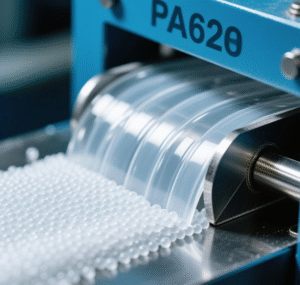
- Polyamide: Such as PA66 (Nylon 66), the most commonly used connector housing material. Advantages: Good toughness, abrasion resistance, low cost. Disadvantages: High moisture absorption, dimensional stability affected by humidity. Strength and heat resistance are typically enhanced by adding glass fiber (GF).
- Polybutylene terephthalate (PBT): Excellent mechanical strength, rigidity, and dimensional stability; low moisture absorption; good heat resistance. An upgraded alternative to PA66, commonly used in harsh environments like engine compartments.Polysulfone (PSO): High-performance material with exceptional heat resistance (long-term use >200°C), dimensional stability, flame retardancy, and chemical corrosion resistance. Highest cost, primarily used in the most demanding engine compartment applications.
Sealing Materials
- Silicone Rubber: Widest application range. Resistant to high and low temperatures, ozone, with excellent electrical properties and physiological inertness, making it the preferred material for seals.
- Fluorosilicone Rubber: Enhances fuel and lubricant resistance over standard silicone rubber, used in areas potentially exposed to direct contact with fluids.
Harness Sealing Design
Connectors themselves cannot form a sealed space; a systematic auxiliary system is required to create an enclosed environment.
Sealing Principle
Relying on the rebound force generated when elastic seals are compressed, a sustained, tight pressure is formed on the contact surface, thereby blocking the passage of water and moisture.
Design Considerations
- Seal Compression Ratio: Precise calculation of seal compression (typically 15%-30%) is essential during design. Insufficient compression causes seal failure, while excessive compression increases insertion/extraction force and accelerates seal aging.
- Surface Finish: The plastic housing surface contacting the seal must have adequate surface roughness (Ra value) to minimize friction and wear, ensuring seal reliability.
- Transition Zone Design: When wiring harnesses enter sealed areas from non-sealed zones (e.g., through body panel holes), transition sealing must be achieved using rubber sleeves or injection-molded seals.
- Vent and Drain Holes: Connectors requiring water resistance but not full sealing may incorporate vent holes to equalize internal/external air pressure and drain holes to promptly expel any ingress moisture.
Principles for Selecting Automotive Wire Harness Connectors
Connector selection follows these principles:
- Electrical Parameters Take Priority: First determine voltage, current, and signal type (high-speed/low-speed). This forms the fundamental basis for selecting the connector series and terminal type.
- Operating Conditions:Specify operating temperature, humidity, presence of vibration, chemical substances (oils, fluids), and required IP protection rating. This determines housing material, sealing solution, and terminal plating.
- Space and Harness Layout:Evaluate available mounting space, harness routing, mating direction (axial, lateral), and whether it is a blind-mate application.
- Number of Circuits:Determine the required number of terminals, considering potential future functional expansion, and reserve some spare positions.
- Regulatory and Standard Compliance:Must meet relevant automotive industry standards such as USCAR, VW60330, and various EMC regulations.
- Cost Solution: Under the premise of meeting all performance requirements, comprehensively evaluate supplier support capabilities, product quality stability, and delivery lead times.
- Assembly/Maintenance Ease: Connector design should facilitate quick and correct assembly, as well as diagnostics and replacement.
Custom Automotive Wiring Harness Process and Analysis
When standard connectors fail to meet specific requirements, customization becomes necessary.
Customization Process:
- Confirm Customer Requirements:
- Clarify all electrical specifications, mechanical applications, operating environments, service life, and cost constraints with the customer.
- Modeling and Component Matching:
- Develop 3D models and component matching solutions based on customer specifications.
- 2D Drawings:
- Perform tolerance analysis based on the 3D model and component clearances to ensure proper fitment and generate 2D drawings.
- Prototype Production:
- Manufacture sub-components via molded molding and assemble them into prototype wiring harnesses.
- Prototype Validation:
- Deliver prototype samples to customers for trial assembly verification and other testing procedures.
- Matching Auxiliary Production Equipment:
- Equip production lines with necessary tooling, fixtures, and inspection equipment based on prototype samples.
- Mass Production:
- After mass production commences, ensure controllability and traceability of the manufacturing process according to corresponding industry standards.
Conclusion
The above content is authored by JinHai’s technical experts based on years of experience. We hope this article helps you build a knowledge framework from fundamentals to practical application. As a professional custom wire harness supplier, JinHai collaborates across industries to co-design and develop innovative wire harness solutions with you. We aspire to be your strongest ally on the path to success, delivering robust and reliable power for a future of mobility.