Chapter 1: What is a TRS Cable?
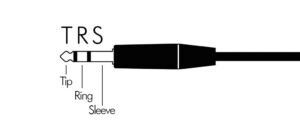
A TRS cable is a type of audio connector cable that has three conductors — Tip, Ring, and Sleeve.
Its basic construction often is of copper (sometimes with a gold- or silver-plated surface) with an insulating layer and shielded against electromagnetic interference.
TRS (Tip-ring-sleeve) cables function using differential signalling: balanced connections means that tip & ring carries signals bearing opposite polarity which allows the receiver to remove noise through phase cancellation to carry high-fidelity transmission.
The tip is the left channel and the ring is for right channel in stereo jacks. Their applications are many and varied, from professional microphone and mixer inputs, consumer-grade headphone jacks, to the audio output on a synthesizer keyboard.
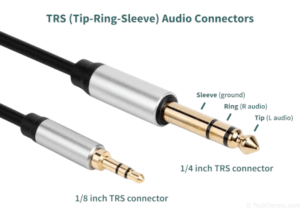
Chapter 2: TRS cable plug sizes variations
The three main sizes of TRS cable plugs are 6.35mm (1/4-inch), 3.5mm (1/8-inch), and 2.5mm.
6.35mm Plug
The biggest size used most often in professional audio equipment including electric guitars, amplifiers, mixing consoles and microphones. Built to last, they can handle repeated plugging/unplugging and rough concert conditions.
3.5mm Plug
The most common size, used in headphone jacks on consumer electronics such as smartphones, computers and tablets. It still serves as the default for portable devices.
2.5mm Plug
Even smaller, found on pro radios or cameras, or certain audiophile-grade headphones. It has a relatively low market share due to being subject to damage and incompatibility.
A plug size needs to be selected in relation to the interface specifications and usage environment of the device.
Chapter 3: TRS vs TS: What’s the Difference?
TRS and TS Cables Explained: The Structure/Function Breakdown
How Are They Different?
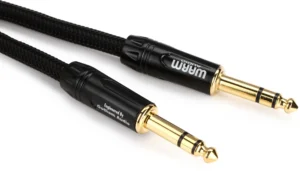
TS cables have two conductors (Tip and Sleeve)TRS cable adds a third conductor(Ring). That additional conductor gives TRS cables more versatility.
Signal Transmission
TS cables transmit mono unbalanced signals; therefore, they are susceptible to noise interference (e.g., electric guitar signals). A TRS, or Tip-Ring-Sleeve, cable has three conductors that can carry both balanced and stereo signals, which cancels noise for clean output.
Usage
Instrument leads; electric guitars to amplifier It uses TS the most. TRSHondo has person an in different and HOX types of headphones, audio These machines used mainly NeIX approved ear, portable & professional balanca networks.
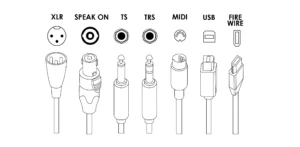
Chapter 4: What are TRS and TS Cables: Similarities?
With distinct roles to play, TRS and TS cables do have a number of characteristics in common.
Common Construction Characteristics
Both of them use metal plugs and shielded cable bodies, with a so called tip and sleeve to make basic electrical connections.
Similar Application Environments
Both are ubiquitous in audio transmission, servicing instruments and headphones and speakers alike.
Compatibility Analysis
In practice, TRS plugs work with TS jacks (the Ring contact is ignored when a TRS plug is inserted into a TS jack), but connecting the opposite way will lead to shorts or damage.
Chapter 5: TRS and XLR Cables
Comparisons are between TRS cables and XLR cables, both of which offer different benefits for pro audio use.
Basic Definitions
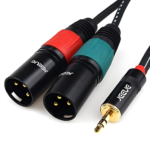
TRS is a smaller, circular three-pole plugin; XLR is a larger, sturdy, circular three-pin connector frequently used to connect microphones and in large-scale sound systems.
Signal Transmission Comparison
Both are capable of balanced signal transmission, cancelling noise in the process. XLR, on the other hand, feature higher-quality locking connections and are less likely to disengage, which is important when in front of a crowd. TRS is more common in small devices and stereo connections.
Selection Recommendations
Use XLR cables where it can be done, for more stable connections. But TRS is still an essential fall-back in cramped environments, or if your devices have only TRS ports.
Chapter 6: The Best-selling Custom TRS Cables
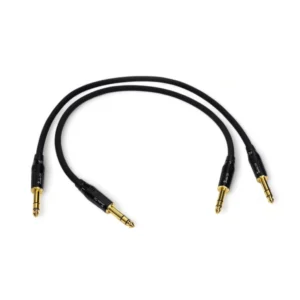
As audio needs have become increasingly diverse, custom TRS cables have caught the attention of many professionals.
Using TRS cables is not a big issue, and the market has a lot of TRS cables that are efficient for your equipment. The puzzle is where to purchase the cable. The fear is understandable since no one would wish to spend resources on buying an item that comes without a guarantee. Jinhai is the safest place if you are looking to purchase a TRS cable.
Custom Advantages
They can also select construction materials (e.g., oxygen-free copper, silver-plated conductor) and shielding techniques (double-layer shielding), as well as lengths, to get the optimal sound quality.
Common Custom Types
These include TRS-to-XLR and TRS-to-TRS adapters, locking TRS cables to specific color or branding. This is particularly crucial in applications where the transmission distance is longer, making specialized cables with superior shielding an absolute prerequisite.
Selection Recommendations
Insist upon high-purity (preferably oxygen-free) copper conductors, heavier-gauge shields (which minimize RF transmission), and top-drawer connector plating (gold or silver provides better corrosion resistance) with custom TRS cabling.
Conclusion
TRS cables are very common tools in the audio field owing to their relatively simple structure and stable transmission characteristics.
These cables are essential for everything from simple stereo connections to complex balanced signals.
As audio equipment continues to evolve and audio quality requirements increase, custom high-end TRS cables will become the mainstream choice of future markets, especially in professional recording and live performance applications. Making sure you know and use TRS cables correctly will not only help protect your equipment but will also be a step toward better sound quality in the rewarding pursuit of audio perfection.
Contact Jinhai today to get your project’s custom-made TRS cables.