Chapter 1: Core Principles and Strategic Significance of Continuity Testing
At its core, continuity testing verifies the existence of a complete current loop within a circuit. From a physics perspective, it involves applying an extremely low test voltage across the path and measuring current or resistance to determine connectivity.
Verification of Closed-Loop Pathways
In a qualified circuit, resistance should approach zero. The fundamental objective of continuity testing is to identify three critical defects:
- Open Circuit: Wire breakage or improperly seated terminals.
- Short Circuit: Physical contact between two nodes that should not be connected.
- Mis-wiring: Incorrect wire sequencing causing signals to transmit to the wrong pins.
Why Continuity Testing is Indispensable
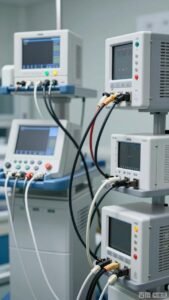
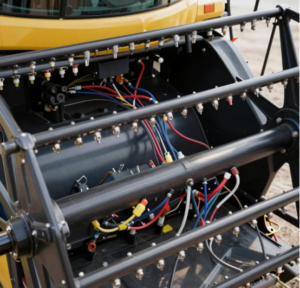
In high-reliability sectors like automotive, medical, and aerospace, wiring harnesses are often encased in complex protective sheathing. Visual inspection cannot detect internal breaks or poor contacts. Continuity testing serves as the first and most critical line of defense, ensuring every wire precisely fulfills its function.
Understanding the principle, we must select the appropriate tools. Across different production scales, the choice of testing tools directly determines quality stability.
Chapter 2: From Manual to Automation: The Multi-Dimensional Evolution of Testing Tools
As wiring harness complexity increases, testing methods have evolved from simple manual checks to intelligent systems.
Basic Tools: Digital Multimeter (DMM)
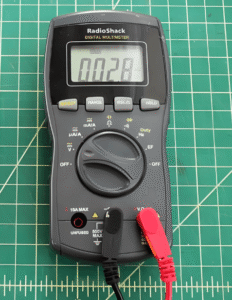
For simple single-wire cables or small-batch repairs, a multimeter remains the most convenient tool. By setting it to the “beep mode,” technicians can quickly determine continuity.
- Limitations: Multimeters provide only qualitative judgments (open or closed), cannot precisely measure minute contact resistance, and are inadequate for complex harnesses with hundreds of nodes.
Industrial-Grade Automated Harness Testers
For mass production, JinHai employs highly automated harness testing systems. These devices complete continuity, short circuit, and miswiring analysis across thousands of nodes within seconds.
- High Efficiency: One-button triggering automatically traverses all circuits.
- Data Traceability: Test results are automatically uploaded to a database, meeting IATF 16949 quality traceability requirements.
Many novice buyers assume that a “green light” on the tester signifies product qualification. However, JinHai’s standards recognize that the real challenge lies in identifying hidden risks masked by this “pass” indication.
Chapter 3: Technical Analysis: Why “Beeping” Doesn’t Equate to “Pass”?
This is a classic industry misconception: a beep from the multimeter means the harness is good. In reality, two critical metrics in continuity testing directly determine a product’s long-term reliability.
The Contact Resistance Trap
If terminals are poorly crimped (cold solder joints) or oxidized, the circuit may still conduct but with resistance as high as several ohms.
- Consequences: Per Joule’s Law $P = I^2 R$, high resistance causes severe localized heating in high-current applications (e.g., EV high-voltage harnesses), ultimately burning out connectors.
- JinHai Solution: We employ a four-wire (Kelvin) measurement method to eliminate the influence of test lead resistance, enabling precise milliohm-level contact resistance measurement.
Intermittent Continuity and Dynamic Testing
This is the most challenging issue for engineers. While wiring harnesses maintain continuity when stationary, connections may experience momentary interruptions (typically lasting only microseconds) during vehicle motion, vibration, or thermal expansion.
- Testing Method: A continuous continuity tester with “vibration capture” capability must be used for dynamic monitoring under simulated vibration conditions.
Chapter 4: Standard Process for Industrial-Grade Harness Continuity Testing
At JinHai’s factory, every harness undergoes a rigorous “Five-Step Testing Method” upon completion, fully compliant with the IPC-WHMA-A-620 international standard.
Step 1: Fixture Matching and Error Prevention
For each customized harness, we design dedicated test fixtures. These fixtures incorporate sensing mechanisms to ensure connectors are fully inserted and latches are locked.
Step 2: Low-Voltage Continuity Scan
Perform a full-circuit scan using low voltage (typically $5V$-$12V$) to verify the point-to-point map fully matches the design drawings.
Step 3: Quantitative Resistance Testing
The system automatically compares measured resistance values against standard specifications. For critical signal wires, resistance variation must be controlled within 50mΩ.
Step 4: Insulation & Withstand Voltage Testing (Integrated with Continuity)
While continuity testing focuses on “path integrity,” we concurrently perform high-voltage testing (Hi-Pot) to ensure no leakage occurs between paths or between paths and the housing.
Step 5: Labeling Confirmation
Only harnesses passing all tests trigger the system to automatically print a unique “Pass” label.
Despite rigorous testing protocols, understanding the root causes of failures is essential for preventing defects at their source.
Chapter 5: Common Failure Diagnosis and Prevention Strategies
In actual manufacturing, failed continuity tests (Open/Short) are typically caused by three core factors:
Crimping Process Defects
Worn crimping dies can cause strand breakage or non-compliant crimp height. This not only increases contact resistance but also reduces pull-out force.
- Prevention: JinHai performs CCD imaging inspection and cross-section analysis on every die batch to ensure optimal metal flow density at crimp joints.
Terminal Back-out
When terminals fail to fully seat in the connector housing, probes may register continuity during insertion but disengage due to vibration upon removal.
- Prevention: Employ automated test benches with “pull-back force” detection functionality.
Oxidation and Contamination
Environmental humidity or chemical corrosion can form insulating layers on terminal surfaces.
- Prevention: Strictly control raw material storage environments and use gold-plated or silver-plated terminals for high-demand products.
Conclusion: Confidence in connecting everything stems from dedication to every node.
Conductivity testing may appear as a simple final step in production, yet it serves as a “microscope” revealing a manufacturer’s expertise. From basic circuit verification to in-depth contact resistance analysis, from static testing to dynamic vibration simulation capture—every detail underpins the safety and reliability of the final product.
At JinHai, we understand that wiring harnesses are an art of connection. We have invested in advanced automated testing clusters and strictly adhere to IPC international standards to ensure that when you integrate JinHai wiring harnesses into your systems, you gain not just physical “conductivity,” but absolute confidence in product quality.