Chapter1:Customizing Harsh Environment Harnesses: What Challenges Do Your Harnesses Face?
Before initiating the customization process, the primary task is to identify the physical boundaries of the application scenario. In JinHai’s engineering cases, we categorize harsh environments into the following four dimensions:
- Extreme Temperature Fluctuations: From extremely cold environments to high-temperature environments. Temperature cycling can cause insulation materials to become brittle or soften.
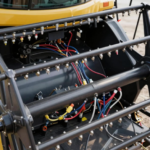
- Mechanical Fatigue and Vibration: Wire harnesses endure millions of bends in industrial robotic arms or heavy machinery.
- Chemical and Liquid Corrosion: Frequent sterilization in medical devices, salt spray exposure on automotive chassis, and oil permeation in industrial settings.
- Electromagnetic Compatibility (EMC) Challenges: Weak signal lines must withstand powerful interference near high-voltage power systems.
Chapter2:Customizing Harsh Environment Wiring Harnesses: Material Selection
Materials form the foundation of harness longevity. To address these challenges, JinHai has established rigorous material screening criteria.
Evolution of Insulation and Sheathing Materials
For high-temperature resistance and chemical stability, we prioritize PTFE (polytetrafluoroethylene) or silicone rubber. For applications demanding exceptional mechanical strength and abrasion resistance, polyurethane (PUR) is the ideal choice for robotic harnesses. Compared to common PVC cables, these advanced materials maintain long-term flexibility in extreme environments without cracking due to aging.
Conductors and Plating Processes
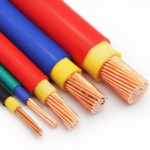
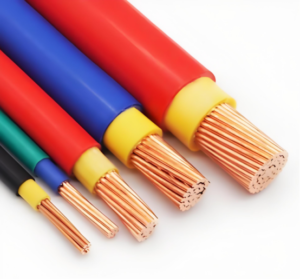
In humid or high-salt-fog environments, bare copper is highly susceptible to oxidation. JinHai employs tin-plated copper, silver-plated copper, or even nickel-plated copper as conductors. This not only enhances corrosion resistance but also optimizes soldering and crimping stability.
Chapter3:Deep Design: Mitigating Risks from DFM
When searching for “custom wire harnesses,” many engineers’ primary concern is “design drawings being unmanufacturable.” JinHai’s DFM (Design for Manufacturing) evaluation system addresses these pain points early in the design phase.
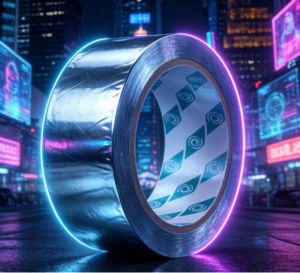
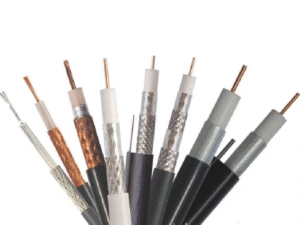
- Shielding Design: For EMI-sensitive applications, we provide not only aluminum foil shielding but also integrate high-density braided shielding to ensure coverage exceeding 85%.
- Strain Relief: Adding heat-shrink tubing support or overmolding at connector ends effectively prevents cable breakage at terminals during severe vibration.
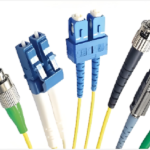
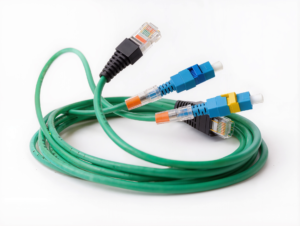
- Connector Selection: For IP67/IP68 ratings, we assist clients in selecting connectors with dual sealing rings and conduct airtightness testing.
Chapter4:Manufacturing Standards and Quality Assurance: The Non-Negotiable Bottom Line
Wiring harness reliability is 30% design and 70% manufacturing. JinHai’s production facilities strictly adhere to globally recognized industrial standards, quantifying “quality” into traceable data.
IATF 16949 & IPC-A-620
As an IATF 16949-certified facility, every process—from wire stripping and crimping to harness assembly—complies with IPC/WHMA-A-620 standards. This ensures standardized measurements for terminal crimp height and solder joint wettability.
100% Conductivity and Functional Testing
We reject sampling inspections. At JinHai, every harness leaving our facility undergoes testing by fully automated inspection equipment, covering:
- Open circuit/short circuit testing
- Insulation resistance testing (Hipot Test)
- Pull-force testing: Ensuring terminal crimp strength exceeds industry standards by 20%.
Chapter5:Addressing Industry Pain Points: Why Choose JinHai as Your Partner?
Amidst today’s volatile global supply chains, JinHai commits to resolving industry challenges:
- Low Minimum Order Quantity (MOQ) for Prototype Development: We understand the critical importance of the R&D phase. Even if you require only 10 sample sets for performance validation, JinHai will assign a dedicated team of professional engineers to support your project.
- Rapid Response & Agile Delivery: Leveraging extensive material reserves (including stocked inventory of mainstream connectors like Molex, TE, JST), we reduce prototyping cycles to 3-5 business days.
- Full Lifecycle Technical Support: We go beyond order fulfillment, providing continuous recommendations for cost optimization and process improvements throughout your product’s lifecycle.
Chapter6:Conclusion
In harsh environments, wiring harnesses are far from mere accessories—they are critical components determining equipment success. Partnering with a supplier who understands materials, design, and standards can significantly accelerate your R&D journey.
JinHai remains committed to delivering one-stop customized wiring harness solutions for global clients through masterful craftsmanship and stringent quality standards. Whether your challenges arise from deep-sea operations, desert conditions, or automated factories, we stand ready to connect you reliably.