As an industry-leading harness manufacturer, JinHai provides systematic solutions to these challenges through deep expertise in manufacturing processes and materials research.
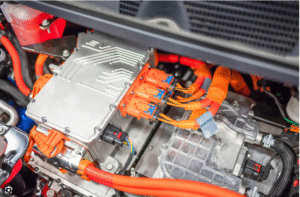
In-Depth Analysis of Core Challenges in High-Voltage Cables
During the internal combustion engine era, harnesses primarily carried 12V/24V signals and power with minimal safety risks. However, in the new energy era, high-voltage harnesses must maintain zero-fault operation under extremely demanding conditions.
Managing Severe Thermal Effects
According to Joule’s Law (Q = I²Rt), current flowing through wiring harnesses can reach thousands of amperes during ultra-fast charging or full-speed driving. If heat generated by high currents cannot dissipate promptly, it causes thermal degradation of insulation layers and may even trigger fires. The primary concern for buyers is excessive temperature rise at connector terminals.
Electromagnetic Compatibility (EMC) Challenges
High-voltage, high-current systems generate intense electromagnetic radiation that interferes with low-voltage signals from precision in-vehicle sensors (e.g., lidar, ADAS cameras). This “electromagnetic noise” is an invisible threat causing vehicle system crashes or false signal alerts.
Lifespan Degradation Under Environmental Stress
Vehicles generate vibrations at varying frequencies during operation, while wiring harnesses endure extreme temperature and humidity fluctuations. In high-voltage environments, even minor wire fatigue fractures or insulation wear can trigger arcing hazards.
Transition: Addressing these physical limitations begins with sourcing suitable raw materials.
High-Voltage Cables Material — Balancing Performance, Weight, and Cost
In materials science, JinHai helps OEMs achieve the golden ratio between performance and cost by optimizing conductors and insulation layers.
Conductor Material: The Dialectic of Copper and Aluminum
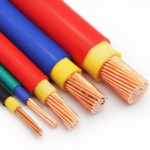
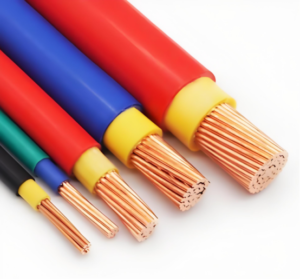
While copper offers exceptional conductivity, its weight and cost limit range improvements. JinHai is currently assisting clients in promoting aluminum-core High-Voltage Cables. By increasing cross-sectional area and employing specialized friction welding techniques, aluminum conductors reduce harness weight by approximately 30%–40% while maintaining current-carrying capacity.
Insulation Materials: Silicone Rubber vs. XLPE
- Silicone Rubber: Exceptionally flexible with temperature resistance up to 200°C, ideal for complex engine bay routing.
- XLPE: High mechanical strength, excellent scratch resistance, relatively low cost, better suited for chassis wiring.
JinHai provides customized material solutions for different operating conditions, ensuring harnesses remain crack-free and intact throughout their entire lifecycle.

JinHai Manufacturing Processes: The Core Solution to Reliability Challenges
Even with top-tier materials, subpar manufacturing processes can still lead to harness failure in real-world applications. JinHai has implemented multiple Industry 4.0-level production standards to precisely address process challenges.
Ultrasonic Welding
Traditional crimping processes often result in excessive contact resistance when handling large-gauge wires (e.g., 70mm² and above). JinHai employs ultrasonic metal welding technology to fuse wires and terminals at the atomic level. This not only reduces voltage drop but fundamentally eliminates the risk of excessive heat generation at crimped joints.
360° Full-Shielding Crimp Process
To completely eliminate EMI, we implement 360° seamless shielding mesh crimping at connector interfaces. Precision mold control ensures extremely low contact impedance between the shielding layer and housing, establishing a complete Faraday cage that effectively blocks interference.
Digital Quality Monitoring (CCD Inspection)
Automotive wiring harnesses tolerate no “random defects.” Our production lines feature CCD vision systems for real-time monitoring of each terminal’s crimp height (C.H.) and width (C.W.). Any finished product deviating from standard tolerances is automatically rejected, ensuring zero-defect delivery to customers.
Transition: While physical robustness of hardware is crucial, active safety protection is equally indispensable for high-voltage systems.
Safety Protocols—High-Voltage Interlock (HVIL) and Sealing Protection
How do we ensure personnel safety from electric shock during collisions or maintenance disassembly of new energy vehicles? This represents the final line of defense in high-voltage wiring harness design.
Optimized High-Voltage Interlocking Circuit
JinHai precisely integrates HVIL signal lines into the power harness during custom development. Should a connector disconnect abnormally or become loose, the interlocking circuit prioritizes power disconnection. Our multi-circuit design resolves issues of false interlock signal triggering and response delays.
IP67/IP6K9K-Rated Sealing Protection
New energy vehicle chassis frequently endure water immersion and high-pressure washing. All our cable assemblies undergo helium leak testing before shipment, ensuring exceptional airtightness under extreme pressure to prevent moisture ingress and high-voltage tracking.
Conclusion: Driving a Green Future with JinHai
The development and manufacturing of High-Voltage Cables for electric vehicles. From tackling thermal challenges posed by high currents to resolving complex electromagnetic interference and achieving lightweighting goals, every detail determines vehicle safety and brand reputation.
As a professional manufacturer, JinHai delivers not only finished wiring harnesses but also comprehensive DFM (Design for Manufacturing) support.
With comprehensive testing laboratories, IATF 16949 certification, and a passion for cutting-edge new energy technologies, we are committed to becoming the most trusted partner for global Tier 1 suppliers and automakers.