Challenge One: Safety and Thermal Management Under Current Surges
In high-voltage systems, the safety of high-voltage wiring harnesses is always the top priority. Massive energy must be transferred between the power battery, inverter, and drive motor in new energy vehicles. According to Joule’s Law (P=I^2R), heat generation increases quadratically with current.
Rigorous Tests in Heat Dissipation and Temperature Rise
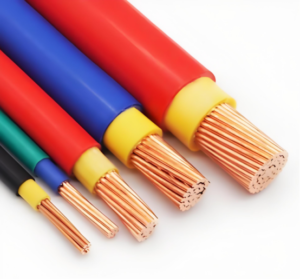
The adoption of 800V fast-charging technology means wiring harnesses must handle continuous currents exceeding 400A. If conductor cross-sectional area is improperly selected or crimp contact resistance is too high, heat accumulates rapidly.
JinHai discovered during production that traditional natural cooling could no longer meet requirements. We modeled temperature gradients in terminal crimping zones using simulation software, ensuring temperature rise is strictly controlled within 50K under peak load.
High-Voltage Wiring Harnesses Insulation and Arc Protection
Unlike low-voltage systems operating at 12V, high-voltage wiring harnesses require exceptionally high dielectric strength. In high-altitude or high-humidity environments, air insulation properties degrade, significantly increasing the risk of arcing.
- Solution: We strictly adhere to the LV 214 standard. By optimizing the sealing structure at the connector rear end and increasing the creepage distance, we eliminate the risk of tracking and leakage. Additionally, 100% high-voltage withstand testing (Hi-Pot Test) is standard for all JinHai products, ensuring each wire remains intact under 3000V AC.
After addressing overheating risks, JinHai tackles the more complex challenge of electromagnetic interference (EMI).
Challenge Two: Electromagnetic Interference (EMI) in High-Frequency Environments
Within the confined spaces of new energy vehicles, high-voltage wiring harnesses and low-voltage control lines are often routed in parallel.
Switching operations in high-voltage power semiconductors generate intense high-frequency electromagnetic pulses. Inadequate shielding can directly cause dashboard screen flickering, sensor false alarms, or even autonomous driving command failures.
Maintaining Shielding Effectiveness
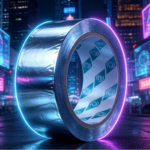
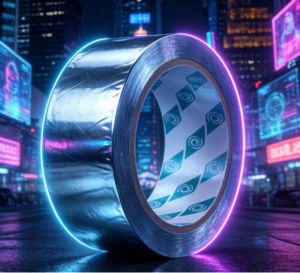
To achieve full-spectrum shielding, high-voltage cables typically employ a dual-layer structure of braided mesh over aluminum foil. The challenge lies in the 360° shielding connection point where the cable enters the connector.
- Technical Bottleneck: Many suppliers experience shielding mesh fractures or insufficient crimping force during shield ring crimping, leading to increased contact impedance.
- JinHai’s Breakthrough: We pioneered automated shield folding and crimping technology, ensuring transfer impedance between the shield and connector housing remains at the milliohm level. This achieves over 60dB attenuation across the entire frequency range.
Magnetic Field Coupling and Routing Strategy
Beyond physical shielding, system-level EMC requires scientific routing. We advise clients to adopt twisted-pair high-voltage cables during design, leveraging magnetic field self-cancellation to further reduce EMI.
Electromagnetic protection relies on material selection. However, while pursuing performance, the physical attributes of wiring harnesses—weight, volume, and flexibility—constitute the third critical factor impacting vehicle range and assembly efficiency.

Challenge Three: Material Innovation and Physical Durability—Balancing Flexibility and Toughness
Extremely limited chassis space demands high-voltage wiring harnesses that are both flexible and robust.
Silicone Rubber vs. XLPE: Performance Trade-offs
- Silicone Rubber: Offers exceptional flexibility and temperature resistance (up to 200°C), facilitating small-radius bends in engine compartments. However, it has low mechanical strength and is prone to abrasion.
- XLPE: Provides high mechanical strength at a moderate cost. Its greater hardness poses significant challenges for automated assembly when used with large-gauge wires (e.g., 70mm² and above).
JinHai provides customized solutions for different scenarios:
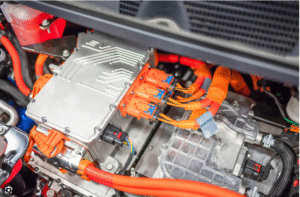
- Flexible silicone cables with specialized orange corrugated tubing for enhanced physical protection are recommended for frequently bent areas like motor connectors.
- For relatively fixed, long-distance routing on chassis, lightweight, thin-walled cross-linked materials with superior abrasion resistance are preferred.

Lightweighting and the “Aluminum-for-Copper” Trend
To reduce costs and vehicle weight, aluminum conductors are gaining maturity in application. However, aluminum is prone to oxidation and exhibits significant mechanical creep. JinHai addresses the pain point of electrochemical corrosion at aluminum-copper connections by introducing ultrasonic welding technology, ensuring long-term reliability at connection points.
The realization of technical solutions ultimately depends on quality implementation at the production site.
As a manufacturer, how do we transform these complex theories into high-quality finished products?
Process Advancement: How JinHai Redefines Industry Benchmarks Through Manufacturing Standards
At JinHai, we deeply understand the automotive industry’s pursuit of “zero defects.” Manufacturing high-voltage wiring harnesses involves far more than simple wire cutting and crimping.
- Full-Process Monitoring of Terminal Crimping: Our pressure monitoring system captures real-time pressure curves for every crimping cycle. Any minor resistance fluctuations or copper wire flashes are automatically rejected.
- Traceability for Critical Processes: Each high-voltage harness carries a unique QR code identifier. Through our digital factory system, you can trace production conditions like environmental humidity, crimping parameters, and even the operator’s qualifications.
- Comprehensive PPAP Support: We deliver not just products but complete validation services, assisting clients through complex project approval processes.
Conclusion: The Future of New Energy Harnesses Lies in System-Level Integrated Innovation
The development and manufacturing of high-voltage harnesses for new energy vehicles represent a comprehensive challenge involving safety, EMC performance, and materials science. Single-dimensional optimization can no longer meet increasingly stringent industry demands.
As your strategic partner, JinHai remains committed to addressing high-voltage interconnect challenges for global customers through forward-looking material research and precision process control. We deliver not just wiring harnesses, but the foundational assurance enabling new energy vehicles to operate safely and efficiently on the 800V track.