Choosing the wrong solution can lead to wasted costs and product failure in harsh environments. As a professional manufacturer with years of industry expertise, JinHai frequently encounters clients confusing these two concepts in their RFIs.
Core Definition: Understanding Essence Through Structure
To differentiate them, first examine their “anatomical structure.”
1. What is a Wire Harness?
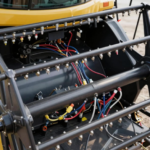
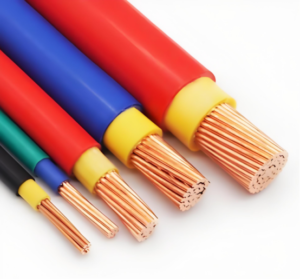
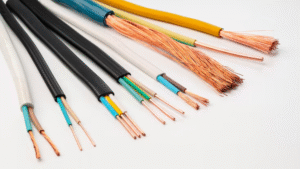
A Wire Harness, commonly referred to as wiring or wiring harness, is a collection of multiple individual wires or cables.
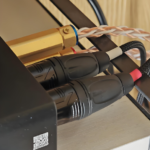
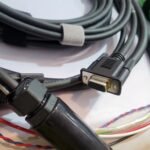
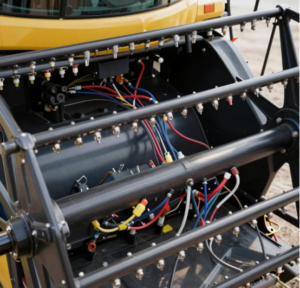
- Structural Characteristics: Its defining feature is “bundling.” It uses zip ties, electrical tape, conduit, or simple braided sleeves to secure multiple wires together.
- Appearance: Individual wires are typically visible internally. While an outer layer provides protection, it is generally non-sealed and primarily serves to organize wiring and prevent tangling.
2. What is a Cable Assembly?
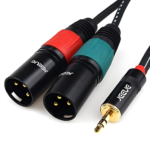
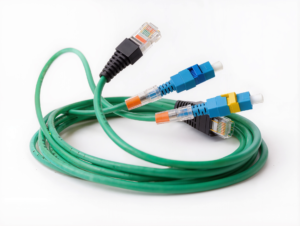
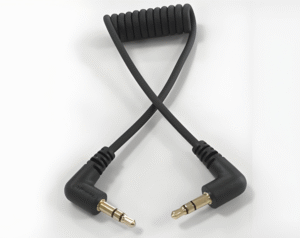
A Cable Assembly, commonly referred to as a cable assembly or finished cable.
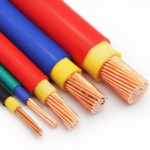
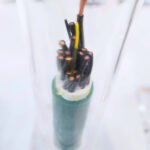
- Structural Features: Its defining characteristic is an “integrated sheath.” Multiple conductors are enclosed within a robust, continuous outer insulation sheath/jacket. This outer covering is typically manufactured via extrusion or injection molding.
- Appearance: Visually, it presents as a single thick black (or gray, orange) tubular form, concealing the internal individual wires. Both ends are typically fitted with heavy-duty connectors.
JinHai Tip: The simplest distinction is this—if you can easily peel back the outer layer to see individual wires inside, it’s a Wire Harness; if the outer layer is a thick, sealed rubber or PVC sheath requiring a knife to cut open, it is a Cable Assembly.
In-Depth Analysis Across Three Dimensions: Why Are They Not Interchangeable?
Understanding the definitions is only the first step. In practical engineering applications, the choice between the two solutions is typically determined by the following three key factors:
1. Environmental Tolerance
- Wire Harness: Primarily designed for internal environments. Its protective layers (tape, corrugated tubing) mainly guard against abrasion but cannot fully resist water, dust, or chemical corrosion. Once liquid infiltrates the corrugated tubing, drainage becomes extremely difficult.
- Cable Assembly: Engineered for harsh external conditions. Its robust outer sheath (e.g., TPU, PUR, PVC) delivers IP67 or even IP68-rated protection. It withstands UV exposure, rain, oil contamination, extreme temperatures, and heavy machinery.
2. Physical Protection and Mechanical Strength
- Wire Harness: Emphasizes flexibility and space optimization. Without a heavy outer jacket, wire harnesses can be designed into highly complex geometries to fit into tight spaces like automotive door panels or aircraft interlayers. Its strength lies in its “softness.”
- Cable Assembly: Emphasizes protective performance. The rigid outer sheath serves not only as insulation but also as a physical shield. In automated factories, cables are frequently dragged across floors or subjected to millions of repetitive bends within drag chain systems—only Cable Assemblies can withstand such stresses.
3. Installation and Layout
- Wire Harness: Typically a “many-to-many” system. A complex harness may feature dozens of breakouts connecting various sensors and actuators within a device.
- Cable Assembly: Typically a “point-to-point” connection system. Connects port A to port B with a clear, direct path.
Application Scenario Comparison
To illustrate more clearly, let’s examine typical cases encountered by JinHai in actual production:
Primary Applications of Wire Harnesses:
- Automotive Industry: The electrical systems within vehicles are the absolute domain of wire harnesses. From engine control units to window regulators, complex wiring must navigate through body panels, making the flexibility of wire harnesses crucial.
- Home Appliances: Control wiring inside washing machines, refrigerators, and air conditioners.
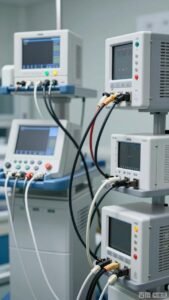
- Medical Devices: Circuit connections within CT scanners or ventilator housings.

Primary Applications of Cable Assemblies:
- Industrial Automation: Servo motor cables, encoder cables, and cables connecting PLCs to robotic arms. These cables are directly exposed in factory environments and must resist oil and abrasion.
- Outdoor Communications: Power and signal cables for 5G base stations, requiring resistance to wind and sun exposure.
- New Energy: Charging gun cables for electric vehicles (EVs), needing to withstand vehicle and outdoor weather conditions like rain and snow.
Given that cable assemblies appear to offer superior protection, why not use them exclusively? This leads to another key concern for procurement teams—cost.
Manufacturing Process and Cost Analysis
As a manufacturer, JinHai clearly perceives the cost structure differences between the two when quoting.
1. Manufacturing Process Differences
- Wire Harness: This is a labor-intensive process. While wire cutting and terminal crimping can be automated, most steps—laying wires on jig boards, organizing wires, wrapping tape, securing with zip ties, and threading through corrugated tubing—still require manual labor. Despite high labor costs, material expenses (primarily wires and tape) remain relatively low.
- Cable Assembly: This is a material- and equipment-intensive process. Expensive extruders are required to manufacture cables, and injection molding machines (overmolding) are needed to encapsulate connectors. While manual steps are minimal, tooling costs and raw material expenses (specialized sheathing compounds) are significantly higher.
2. Cost Decision-Making
- Choose Wire Harness if no protection is needed: If your cables are housed inside an enclosure, using Cable Assembly constitutes over-engineering. You’ll pay for unnecessary waterproofing and UV protection, adding not only cost but also unnecessary weight and bulk.
- For Harsh Environments, Choose Cable Assembly: Using wire harnesses outdoors to save money will result in equipment repairs and downtime losses due to water ingress that far exceed the initial cost savings.
JinHai Selection Guide: 5 Self-Questions Before Purchasing
Before sending us an inquiry, answer these 5 questions to help us provide a more accurate solution:
- Where is the installation location? Is it inside a protected enclosure (select wire harness) or exposed to the external environment (select cable assembly)?
- What environmental threats exist? Will it be exposed to water, oil, or dust? Is there a risk of rodent chewing? Will it be continuously exposed to sunlight?
- What is the primary function? Is it simple power transmission or high-frequency data transmission (requiring consideration of shielding effectiveness; cable assemblies typically offer superior shielding)?
- What are the space constraints? Is routing space extremely narrow and irregularly shaped? (Wire harnesses are more suitable)
- Is mobility required? Is the cable stationary, or does it need to move with the machine (e.g., drag chain applications)? (Requires highly flexible cable assemblies).
Conclusion
Wire Harness and Cable Assembly
The former is flexible, structurally complex, and ensures seamless internal system connections; the latter is abrasion-resistant, highly protective, and withstands external elements.
- Wire Harness: Excels in flexibility, multi-branch connections, and low-cost internal applications.
- Cable Assembly: Excels in durability, environmental protection, and high-strength point-to-point connections.
At JinHai, we understand the nuances between these two products. We don’t just manufacture to drawings—we help customers review designs. If you’re debating which connection solution to use for a new project, or if your current solution suffers from high costs or failure rates, feel free to contact our engineering team.
JinHai—Connecting not just components, but value.